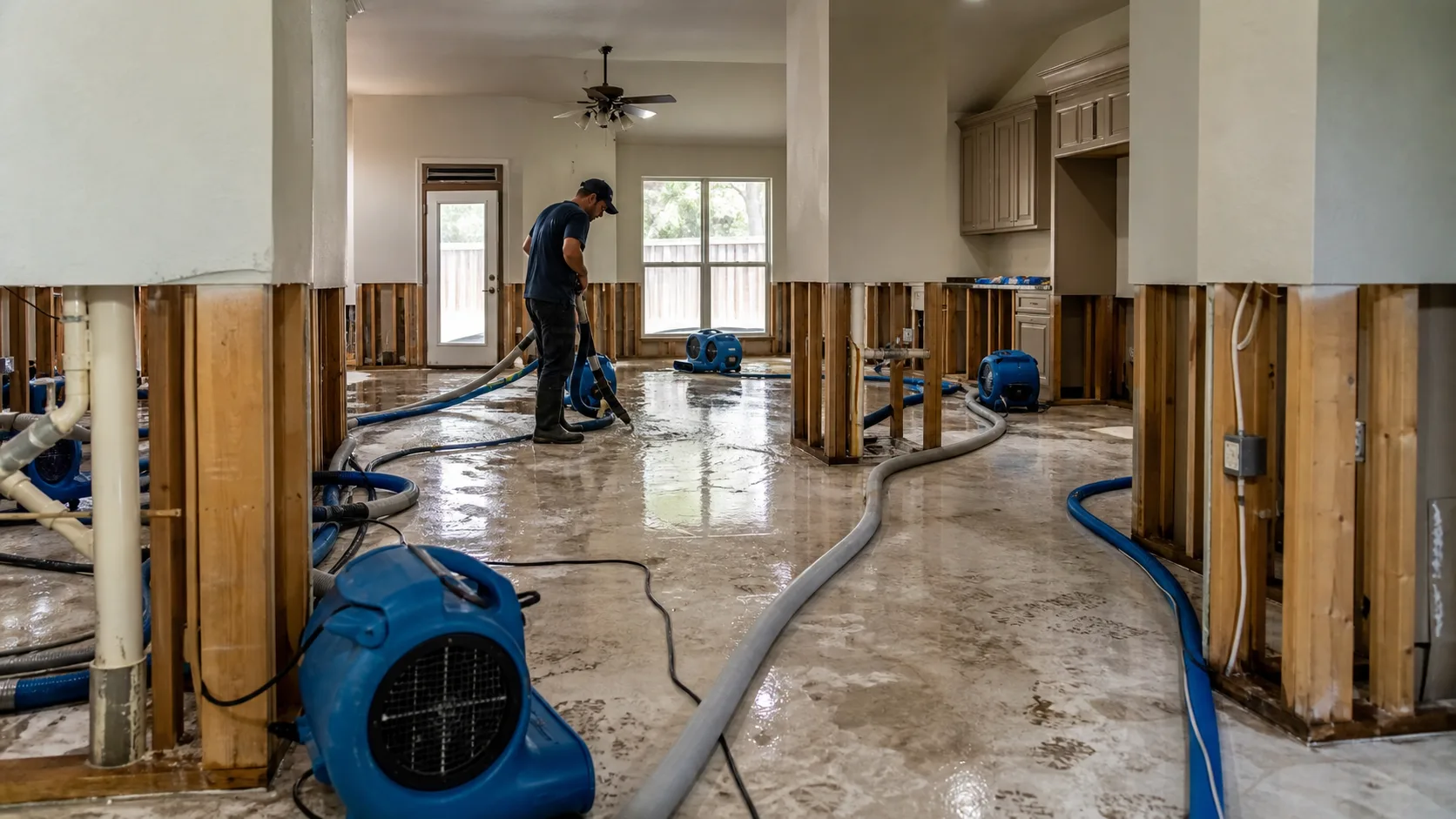
Standing water needs an assessment of safety, the source, and the affected materials. Water extraction removes accessible water; it does not by itself establish that walls, flooring, or the subfloor are dry. Ask a mitigation contractor to explain the cleanup scope, any further drying, and the records you will receive.
Burst pipe, leak or flood? We stop the damage, dry the structure and document every step.
When a leak leaves water across a room, the first service question is straightforward: who can assess the cleanup, and what happens after the puddles are gone? TruePoint Restoration provides water mitigation in Pearland and Greater Houston. Call (346) 271-7004 to describe the situation and ask about assessment availability.
When comparing water restoration companies in Houston, ask whether the proposed water damage restoration service covers extraction alone or the additional work your materials may need.
What does emergency water extraction include?
Water extraction is the removal of accessible water from an affected area. The proposed work should identify where that water is, how the area can be accessed safely, and what needs to happen before equipment is used. The job should also distinguish removal of water from any later cleaning, material removal, and drying.
Describe what you can see from a safe location. Water across tile, a soaked carpet, and water around a built-in cabinet are different starting points. You do not need to identify the water category or diagnose the building before calling. Tell the contractor what happened, when you noticed it, and which rooms appear affected.
Before authorizing work, ask for an explanation of the proposed tasks and their limits. If an estimate says only “water removal,” ask whether assessment of adjacent materials and follow-up drying are included or quoted separately. That question makes the scope easier to compare.
What should happen before someone starts removing water?
Safety and the water source come first. Keep clear of wet electrical equipment, damaged ceilings, and unknown floodwater. Do not walk through water to reach a switch or electrical panel. The CDC’s flooded-home guidance calls for electrical safety to be established before powered water-removal equipment is used.
Source repair is a separate task. A plumber may be needed for a burst supply line; a roofer or another trade may be needed for a different source. Tell the mitigation contractor whether the source has been addressed. Do not describe a repaired pipe as a fully resolved water-damage job until the affected building materials have also been considered.
For the division of work, see who to call for water damage. TruePoint’s mitigation scope does not replace plumbing, electrical, roofing, or reconstruction services.
Why can the room still need drying after extraction?
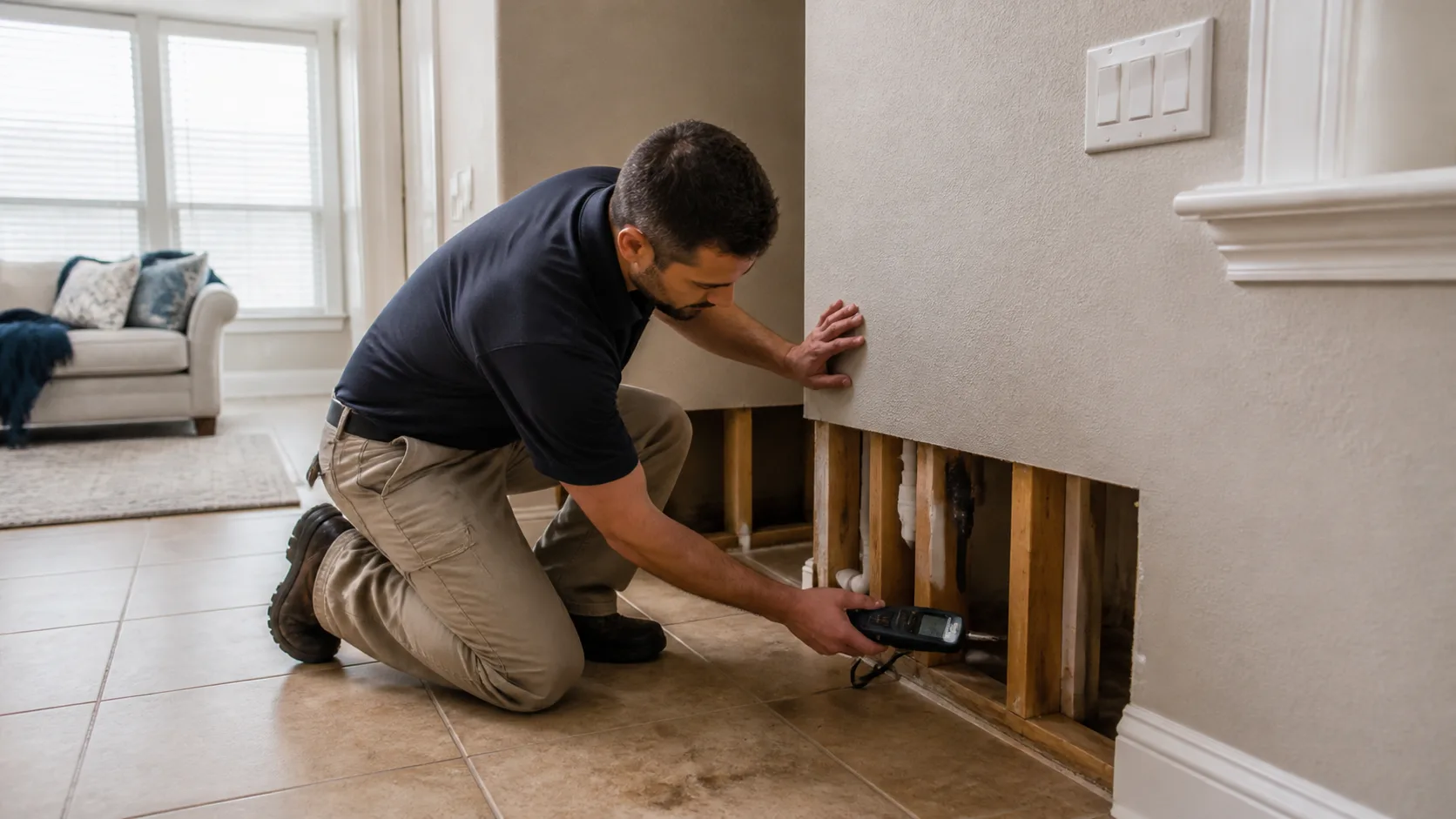
Walls and the layers beneath a floor may still hold moisture after the standing water is removed. The next assessment should explain which materials were checked and whether they need further drying. A clean-looking surface gives you only part of that information.
The EPA’s water-damage cleanup table distinguishes water removal from drying and calls attention to the subfloor beneath flooring. That is a reason to ask about the whole affected assembly, rather than judging the job only by the visible surface.
If further drying is proposed, ask how progress will be assessed and what will support the decision to stop. Our drying-time guide explains why a fixed day count is not a reliable promise for every property.
What changes when the water came from outside or a drain?
The source changes the cleanup assessment. Tell the company whether a supply line broke, a drain backed up, or water entered from outside. If you found the water without seeing where it came from, say that the source is unknown.
Do not start household fans or move wet materials around to prepare for a visit when contamination is suspected. Explain the concern before work begins so the company can assess whether it has the appropriate scope and expertise. Read the sewage-backup cleanup guide if a drain or sewer is involved.
What records should I ask for?
The work record should let you follow what was assessed and what you authorized. Before work starts, confirm which records are included and how you will get copies. Room locations and dated findings are much easier to use later than an unexplained collection of photographs.
Keep your source-repair invoice separate from the mitigation agreement. If the cleanup scope changes, ask for the reason and the revised authorization. A clear explanation helps you understand the work without turning you into the person responsible for diagnosing hidden conditions.
How do I arrange an assessment in Pearland or Houston?
Call (346) 271-7004 with the property address, the apparent source, whether water is still entering, and the areas you can see safely. Mention access restrictions and any electrical, ceiling, or contamination concern. Ask about current availability and what the assessment will include.
The Pearland water restoration service page explains TruePoint’s local mitigation role. The aim of the call is to establish the next appropriate step and a clear scope for your property, rather than assume that removing visible water finishes the job.