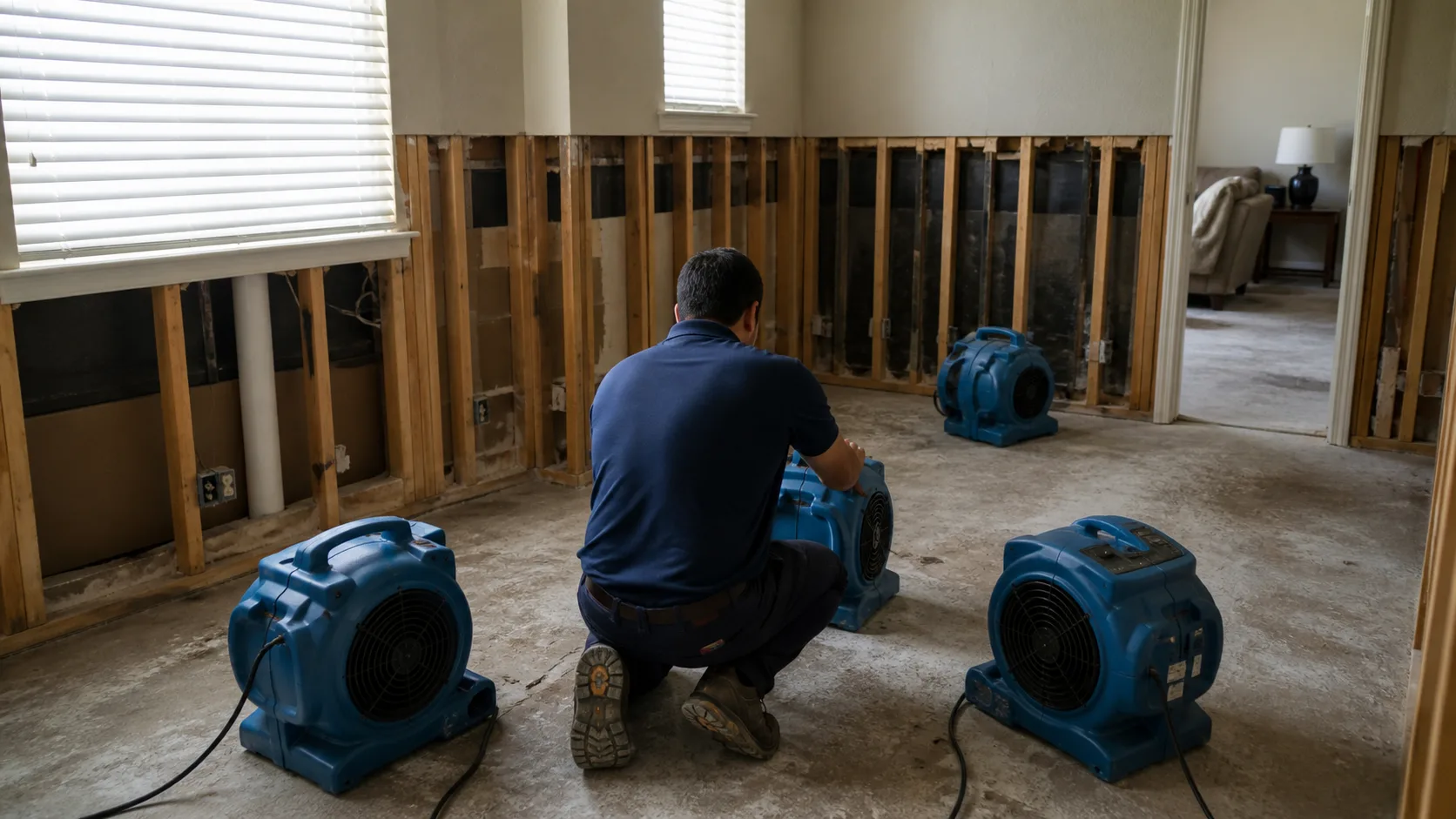
A structural drying plan should identify affected materials, describe the proposed work, and explain how progress and completion will be assessed. Ask which areas were checked, which remain inaccessible, and what findings could change the scope. Equipment placement and a promised number of days do not replace an explanation of the material conditions.
Burst pipe, leak or flood? We stop the damage, dry the structure and document every step.
The plumber fixed the leak, and the floor has been wiped down. You still need to know what happened to the building materials. Structural drying is the part of water mitigation that addresses those materials and the conditions that affect their drying. TruePoint Restoration serves Pearland and Greater Houston; call (346) 271-7004 to discuss an assessment.
When arranging a water damage restoration service, ask how the proposed drying work relates to the affected materials and what will support completion.
What is the difference between drying the room and drying the structure?
Structural drying concerns the affected building materials. A comfortable room or a floor that feels dry does not establish the condition of a wall cavity or the layers below a finish. The assessment needs to identify the materials involved and explain what was found.
For example, “equipment in the living room” tells you where a machine is placed. It does not tell you which materials the work is meant to address, which adjacent areas were checked, or what is outside the scope. Ask for those details before using the equipment list to compare estimates.
The EPA’s homeowner moisture guide emphasizes correcting the water problem and drying affected items. It also cautions against painting over moldy surfaces. Cosmetic work should not substitute for understanding the underlying condition.
What should the initial assessment explain?
The initial assessment should connect the leak history to the areas checked and the proposed work. Tell the contractor when you noticed the water and what the source-repair trade has already done. Leave gaps in that history marked as unknown.
Ask which rooms and materials were assessed and which areas were inaccessible. If further access is proposed, ask why it is needed, what work would be authorized, and which separate trade may be involved. The assessment should not become permission for an unexplained removal scope.
The wet-drywall guide addresses the decision about one material. A structural drying plan needs to explain the materials actually involved in your job, rather than apply the same decision to every wet wall or floor.
What should moisture readings tell me?
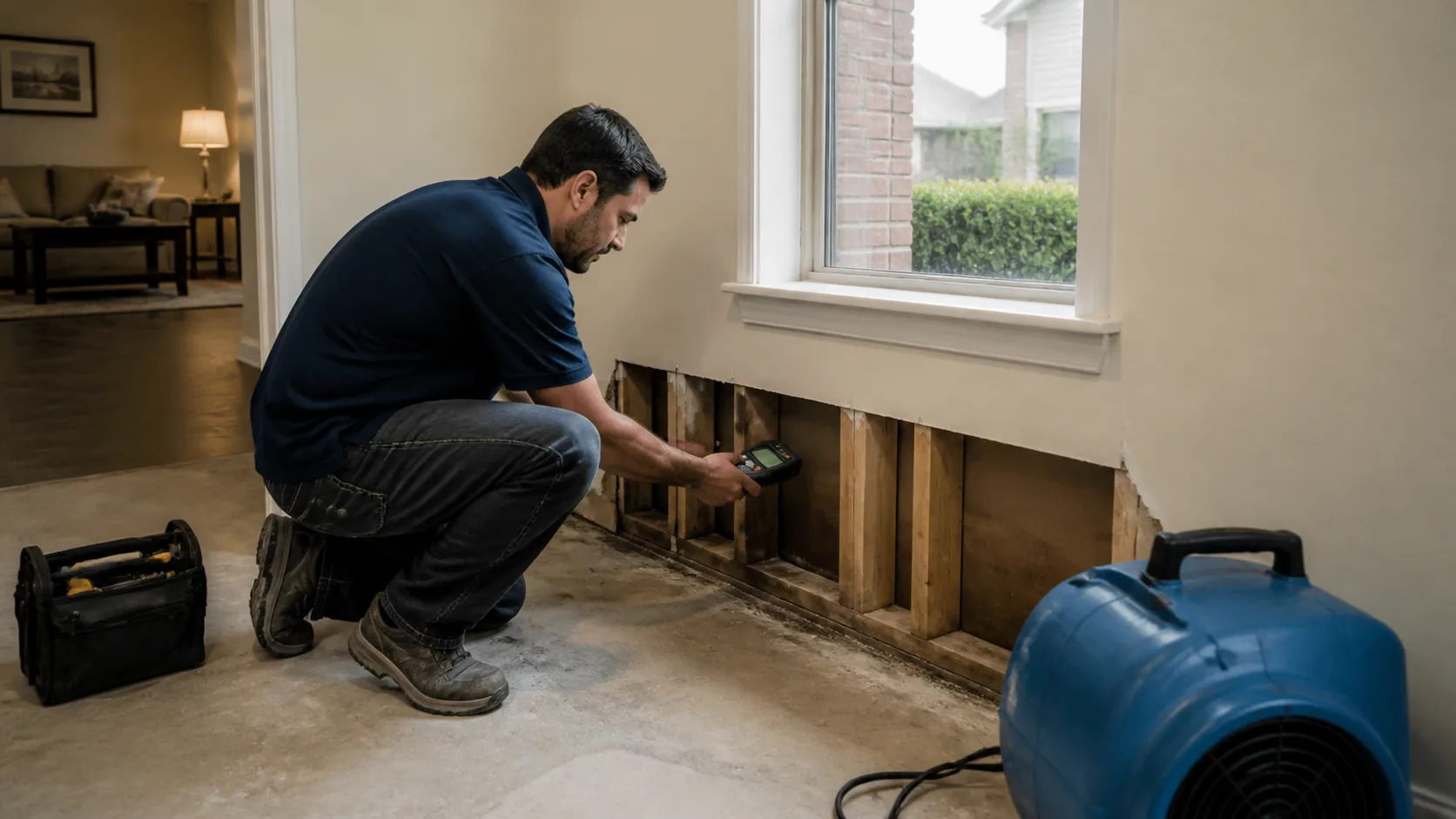
A useful reading tells you something about a particular material in a particular place. The date, instrument and technician’s interpretation give the number its meaning. If you are shown a reading without that context, get the explanation before treating it as a completion decision.
Do not borrow a drying target from an unrelated photo or online example. The question for the contractor is how the condition of your affected materials is being assessed. Ask what findings would support continuing, changing, or finishing the work.
An inaccessible area should remain an identified limit in the explanation. “Not checked” and “checked and acceptable” describe different things. Ask how any remaining uncertainty will be handled before repair work covers the area.
What should a drying record help me understand?
It should make the condition and the work understandable without expecting you to interpret an instrument yourself. Use this as a discussion checklist; it does not prescribe a report format that every contractor includes.
| Part of the record | What you should be able to understand |
|---|---|
| Location | Which room and part of the material the entry concerns |
| Date | When the assessment or progress check happened |
| Finding | What the technician observed or measured, with an explanation |
| Work change | What changed in the proposed drying plan and why |
| Access limit | Which areas could not be assessed |
| Completion | What supports finishing the mitigation scope and what remains for another trade |
For example, a photograph of a meter beside a baseboard still needs the room location and an explanation of what was checked. This is an illustration of a recordkeeping question, not a report from a particular TruePoint job. The work-documentation checklist explains how to keep the resulting records together.
Why might the equipment plan change?
Equipment changes should follow an explanation of the findings. If the plan changes, the company should explain what is changing in your authorized scope and whether it affects charges or access. Keep that explanation with the agreement.
Tell the contractor if equipment operation has been interrupted or if you notice a new leak. Ask how to manage noise, room access, pets, and household routines before changing the setup yourself. Those are practical questions to settle while the team is planning the work.
This article explains the work and the questions to ask. For the separate question of duration, use how long water damage takes to dry. Avoid treating a generic day count as a promise for your home.
What if there is a musty smell or suspected contamination?
Tell the company before disturbing materials or using household fans. The EPA’s cleanup guidance cautions against using fans before water is determined to be clean or sanitary. A drying plan must take the actual conditions into account.
Do not use the presence of drying equipment as a promise that mold cannot develop or that every material can be saved. Ask whether the findings call for a separate specialist or a different scope. Our musty-smell guide covers that concern in more detail.
What should I receive before repairs begin?
Before repairs cover the affected area, obtain a completion explanation for the mitigation scope. It should identify what was assessed, what work was performed, and any access limits or separate repair needs. The repair contractor then assesses its own work.
Keep that information with the source-repair record. The repair contractor should assess its own scope before closing walls or replacing finishes. TruePoint’s mitigation work does not itself include plumbing, electrical work, or reconstruction.
For a local assessment, call (346) 271-7004 or read the Pearland service guide. Describe what has happened and what work is already complete so the next step can address the remaining water damage.