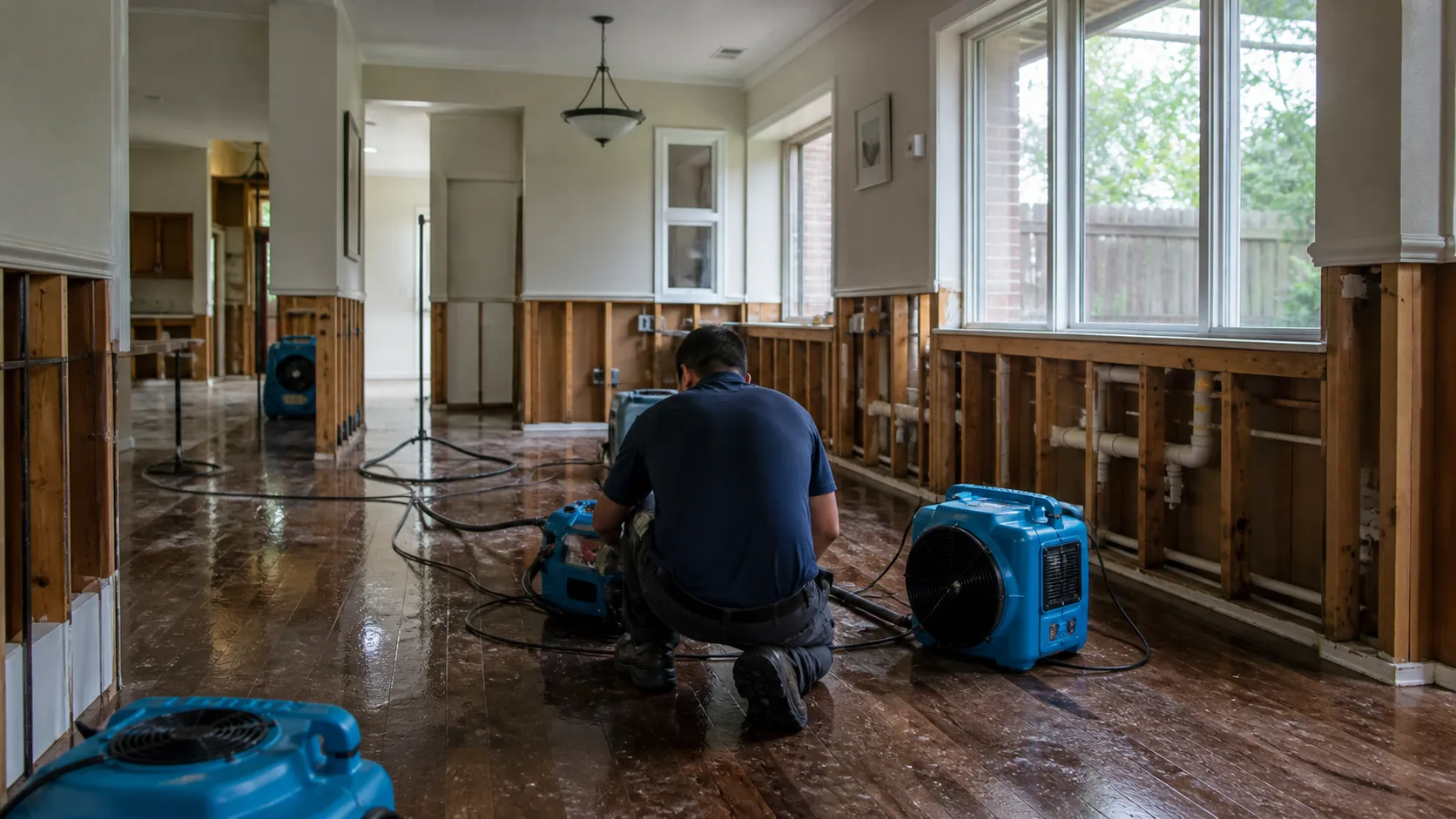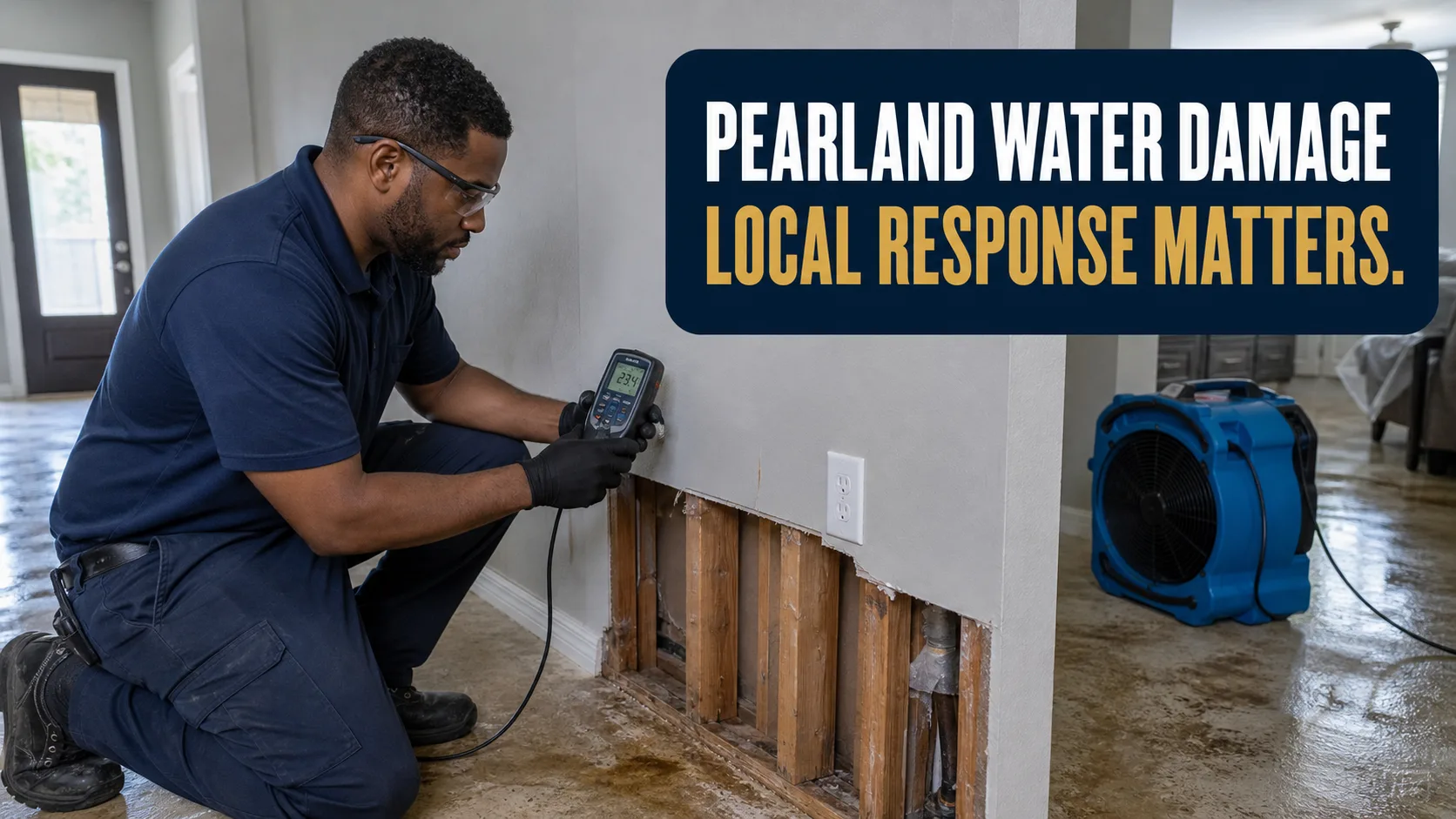
TruePoint Restoration serves Pearland with water mitigation, structural drying, and factual work documentation. Call or text **(346) 271-7004** with your location and what you noticed to discuss assessment availability. Source repairs and reconstruction are separate trades. The proposed work, schedule, and cost depend on the property assessment.
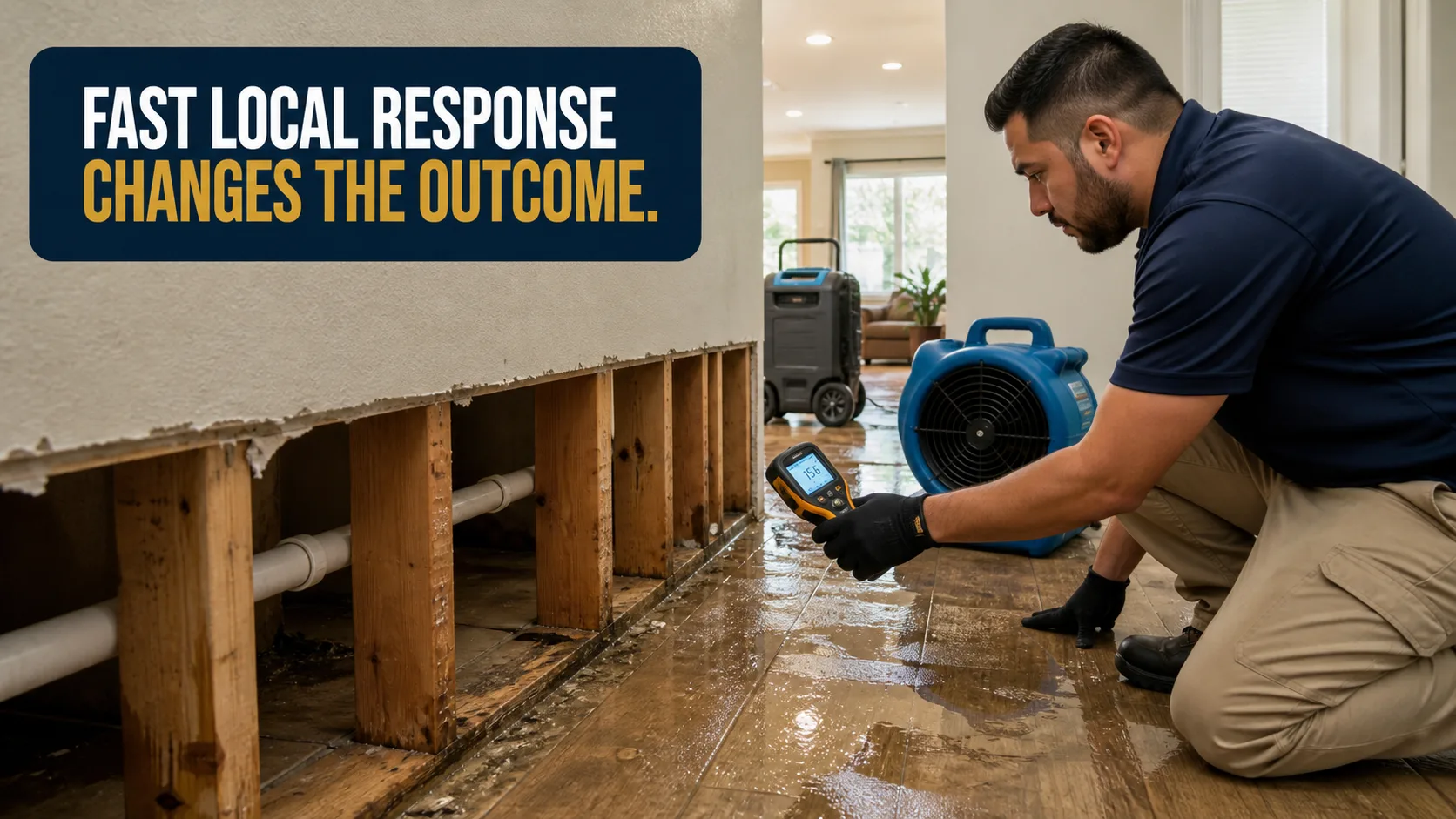
Water damage restoration service for Pearland homes
If you are comparing water restoration companies in Houston for a Pearland property, start with the work your home needs. One company may be quoting extraction and drying. Another may be discussing a plumbing repair or replacing the damaged finishes. Those are related jobs, but they are not the same scope.
TruePoint Restoration serves Pearland with water mitigation, structural drying, and work documentation. We assess the affected materials and explain the proposed mitigation. Plumbing, HVAC, roofing, and electrical repairs belong to the appropriate trades. Reconstruction comes under a separate agreement after the mitigation work.
Call or text (346) 271-7004 with the property location and what you noticed. Ask about current assessment availability. You do not need to know whether a wall cavity is wet, or decide which equipment is needed, before making that call.
The first conversation should answer these questions
Tell us when you discovered the issue, where you saw water or a stain, and whether another professional has assessed the source. If a room or attic is unsafe to enter, explain that limitation. Do not take risks to fill in a missing detail.
Ask what happens next. Will the property need an assessment? Is another trade needed to address the source? What information will help the crew understand the affected areas? The answer should relate to your property rather than a general promise about all water-damage jobs.
Have a contact number ready and explain any access restrictions. If you are arranging help for a family member or managing the property remotely, identify who can authorize work and meet the crew. Confirming that early avoids confusion when the next decision needs a response.
Separate source repair from the damage it leaves
A repaired pipe does not establish that the surrounding building materials are dry. At the same time, drying equipment does not repair the failed pipe. Ask who is handling each part and share the relevant findings between the contractors.
| What you noticed | Source question | Mitigation question |
|---|---|---|
| Water near a heater | Has a qualified plumber or appliance professional identified the leak? | Which nearby materials were affected? |
| A ceiling stain | Which trade should assess the possible source? | What can safely be assessed around the changed area? |
| Water under a sink | Has the plumbing connection or fixture been checked? | Was water limited to the cabinet, or did it reach surrounding materials? |
| A wet floor after a leak | Is the source addressed? | Which flooring layers or adjacent areas need assessment? |
These are questions, not diagnoses from a photograph. If you are unsure which company to contact first, read who to call for water damage in Houston. Tell each contractor what the other one has already established so the two scopes can be coordinated.
What to expect from a mitigation proposal
The proposal should identify the affected areas and describe the work being authorized. Ask what the assessment found, what is still uncertain, and why the recommended approach fits the materials. You should be able to connect an item in the estimate to a condition the crew can explain.
Ask whether the scope includes extraction, drying, monitoring, or any proposed material removal. If access is needed, ask where, why, and how that work will be authorized. Opening a wall or removing flooring is a contractor decision to discuss before the work, not a homeowner task to perform in preparation.
Keep the scope and payment terms together. Ask how added work will be explained and approved if the assessment changes. A short description of the change is more useful than a revised total with no indication of what it covers.
Small signs deserve a clear explanation
A faint ceiling ring, a changed cabinet edge, or a damp area beside an appliance can raise a reasonable question. None proves the source, the water quality, or the full extent of the affected materials. Describe what changed and when you noticed it.
If there is a damaged or sagging ceiling, stay clear of the area. Do not puncture a bubble or enter an unsafe attic to investigate. Water near electrical equipment, suspected gas leaks, or other immediate hazards require the appropriate emergency or qualified trade response.
For the questions behind a ceiling mark, see ceiling leak damage. For water beside a heater, see water-heater leak cleanup. Both guides explain how source repair and mitigation fit together without assuming every mark has the same cause.
How drying decisions are explained
Ask which materials were assessed and how the crew will follow their condition. A drying estimate should come with an explanation of what determines completion and what could change the plan. The number of days equipment has run does not explain the condition of every affected material.
During the work, ask what the latest check showed and what remains unresolved. Keep the updates with your estimate. If additional work is proposed, ask what finding supports it and how it affects the authorization or expected schedule.
Before planning the next trade, ask for the relevant closeout information. A room may need separate repair work even after mitigation is complete. Our guide to water-damage drying time explains the questions to ask before relying on a finish date.
Documentation for your insurer
Tell your insurer about the loss and ask which records it needs. Keep your available photographs and the plumber’s findings with the mitigation agreement, estimates, and invoices. Describe what you know accurately; leave an unknown cause or start date unresolved until the appropriate assessment provides more information.
TruePoint can provide factual records of its own work. That does not make TruePoint your public adjuster or give it authority to decide coverage. Ask the carrier about your policy and claim status, and ask us about the mitigation scope. Those questions may need different people.
For a practical way to organize the discussions, see working with your insurance adjuster. Do not treat an advertisement, an estimate, or the presence of a claim number as a promise that every charge is covered.
Compare the scope before comparing the price
If you have more than one estimate, check that each covers the same affected areas and tasks. Ask which charges relate to equipment use or monitoring, which require added authorization, and what remains outside the scope. A lower total can be difficult to assess when the documents describe different work.
Read the agreement before signing and keep a copy. The Texas Department of Insurance’s contractor guidance recommends written bids and checking references. It also advises care with documents that do not clearly describe the work. Use those checks when comparing contractors, alongside the specific questions about your home.
Ask the insurer separately how it will evaluate the work under your policy. Understanding the contractor’s terms helps you make the authorization decision even while the claim is being reviewed. Do not assume that a contractor sending an invoice to the carrier transfers every payment responsibility away from you.
Arrange the next step for your Pearland property
Contact TruePoint with the information you have. Mention whether the issue appears to involve a ceiling, appliance area, cabinet, or flooring, and whether the source has been assessed. Explain which areas you cannot safely access.
Call or text (346) 271-7004 to discuss water mitigation and assessment availability in Pearland. We can explain our scope and the next appropriate step. For other locations, check our service-area guides and confirm availability for the property address.