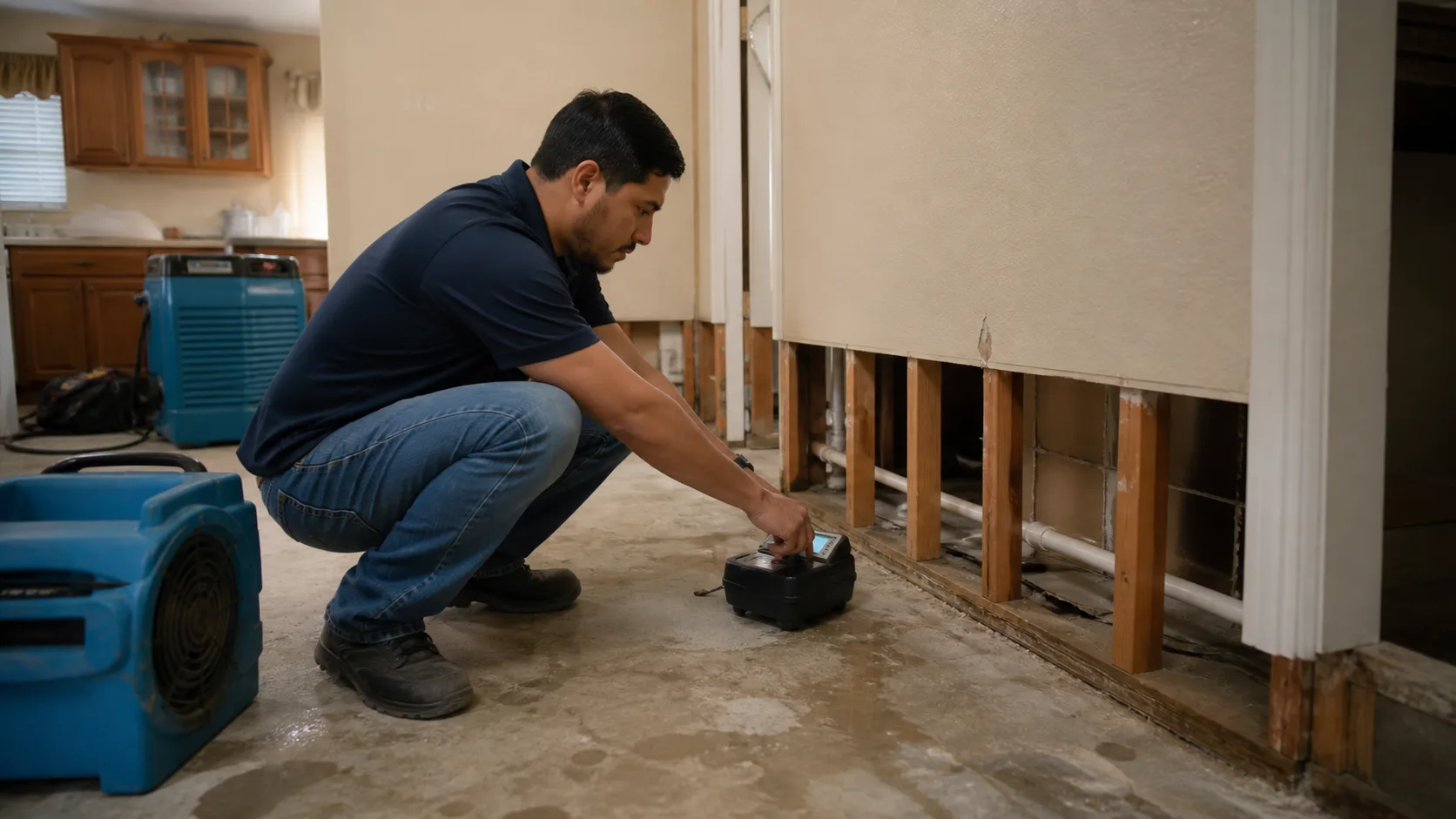
TruePoint Restoration serves Baytown across east Harris county near Galveston Bay — same-day emergency extraction, structural drying, and insurance-grade documentation from a local, owner-operated crew. Baytown's bayside location adds real hurricane and surge exposure on top of everyday interior leaks — and the homeowners-vs-flood coverage line matters here. Call or text **(346) 271-7004** with your location and a photo.

Local to Baytown
On the bay, storms and everyday leaks both put water in homes — and the insurance picture is more complicated because homeowners and flood policies intersect. TruePoint Restoration is local and owner-operated, with a team that documents your loss the way adjusters need and helps you keep the coverage pieces straight.
Baytown sits in Harris County on the north shore of Galveston Bay, with the refinery and chemical complexes on one side and Cedar Bayou and open water on the other. The city runs its own fire department, and the industrial mutual-aid network here is heavier than anywhere else in the metro.
What causes water damage in Baytown homes
- Hurricane and storm exposure. Baytown’s Galveston Bay location means wind-driven rain, roof intrusion, and surge risk. Surge and outside flooding are flood-policy matters; wind-driven rain through storm-damaged roofing may be homeowners.
- Sewer backups. Heavy rain can surcharge systems and cause sewer backups — contaminated water needing professional handling.
- Attic HVAC condensate leaks dropping water through ceilings all summer.
- Corrosion-driven failures. Coastal salt air shortens the life of connectors, water heaters, and fittings.
Flare fallout is not soot, and the difference is your claim
Baytown homeowners find black or gray particulate on window sills, patio furniture, and light-colored siding, and it looks exactly like smoke residue. It is not always. Industrial deposition from a flare or an upset event and true fire soot present the same way to the eye and are handled completely differently — one is a fire claim, the other is a nuisance or third-party matter your homeowners carrier will not pay as fire damage.
The test is not visual. It is whether there was a fire, where the material sits, and what it does under a dry stroke. Soot on walls and ceilings smears and stains, and it is heaviest above heat sources. Deposition falls from above, lands flat, and hits outside surfaces first. Do not wipe either one before it is photographed, because wiping destroys the evidence that separates them. If there was a fire, the residue map belongs in the claim file.
Older housing, bay weather, and salt
Pelly, Goose Creek, and the older Baytown neighborhoods date from the era of galvanized supply and cast iron drains, and both fail the same way — from the inside, gradually, until a pinhole becomes a wall cavity full of water.
Salt in the air off the bay shortens the life of every exposed fitting, every water heater jacket, every condenser cabinet, and every fastener holding a roof down. That last one is why storm losses here so often turn out to involve a roof that was already failing at the fastener before the wind arrived — which is a coverage conversation, not just a drying one.
What we do
- Map the water with moisture meters and thermal imaging.
- Extract and dry with commercial equipment to a verified dry standard.
- Prevent mold by beating the 24-to-48-hour window.
- Document for insurance — and help you keep homeowners vs. flood straight.
What a Baytown job costs, and why the range is wide
Three variables set the number here more than anywhere else in the metro.
- Fire, water, or both. Soot work is priced by surfaces carrying residue and by residue type. Water is priced by affected material and drying days. A fire put out with hoses is both jobs at once.
- How much of the house is original. Cast iron and galvanized in a 1950s Baytown house mean opening more finished surface to reach the same leak.
- Whether the HVAC carried it. A return in an affected room puts the duct system into scope and roughly doubles a small smoke job.
Contained single-room work runs in the low-to-mid thousands. Multi-room smoke with duct decontamination, or storm water through a failed roof into two floors, reaches five figures. Ranges, not a number — and what homeowners actually covers is worth reading before you need it.
Wind, flood, and a third policy
Baytown is coastal Harris County. Wind and hail is carved out of some policies here and written separately, flood is always separate, and surge off Galveston Bay is flood rather than wind no matter what it did to the roof on the way in.
Three possible policies, three deductibles, and one thing that gets claims paid across all of them: a photographic record made before anything was cleaned up.
Do this before the next named storm
- Photograph your roof from the ground on all four sides, in daylight, now. A dated before-photo is the most useful thing you can own.
- Put your declarations pages — homeowners, wind, flood — in one place you can reach in the dark.
- If residue appears on sills or furniture and there was no fire, photograph it with the date and time before you clean it.
Where our work stops
TruePoint Restoration does mitigation. No roofing, no plumbing, no electrical, no HVAC repair, no reconstruction, and no public adjusting.
We handle the residue, the moisture, the contents, the odor, and the file — containment, dry-then-wet soot removal in the order that keeps materials salvageable, extraction and logged drying, and documentation an adjuster can work from. Baytown and the ship channel side of the county, including neighboring Pasadena: call or text (346) 271-7004.
If you have water damage right now
Stay out of standing water near outlets, stop the source if you safely can, photograph everything, then call or text (346) 271-7004. Honest answer, every time.
Serving Baytown and the surrounding Greater Houston metro. See all our service areas.