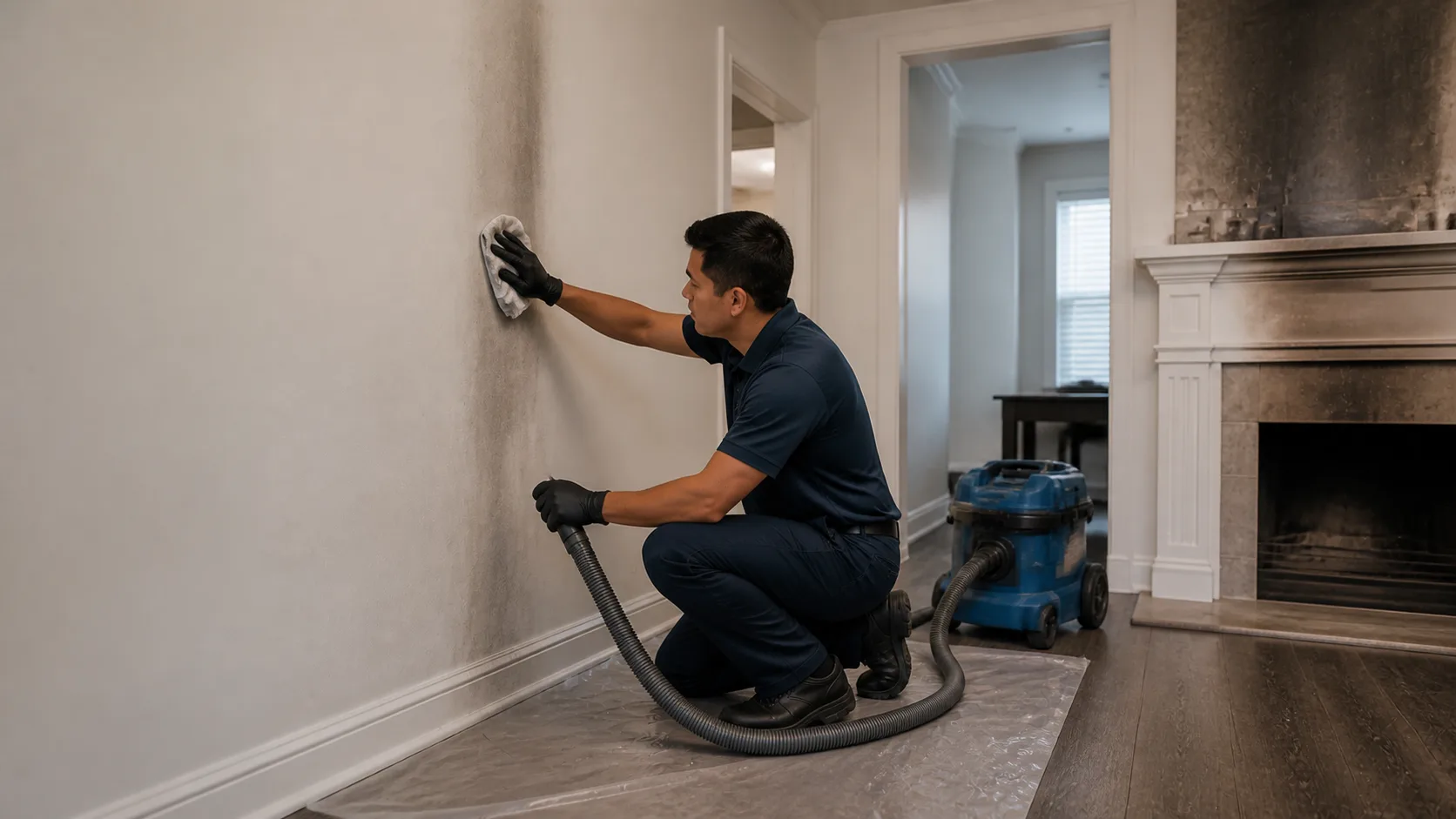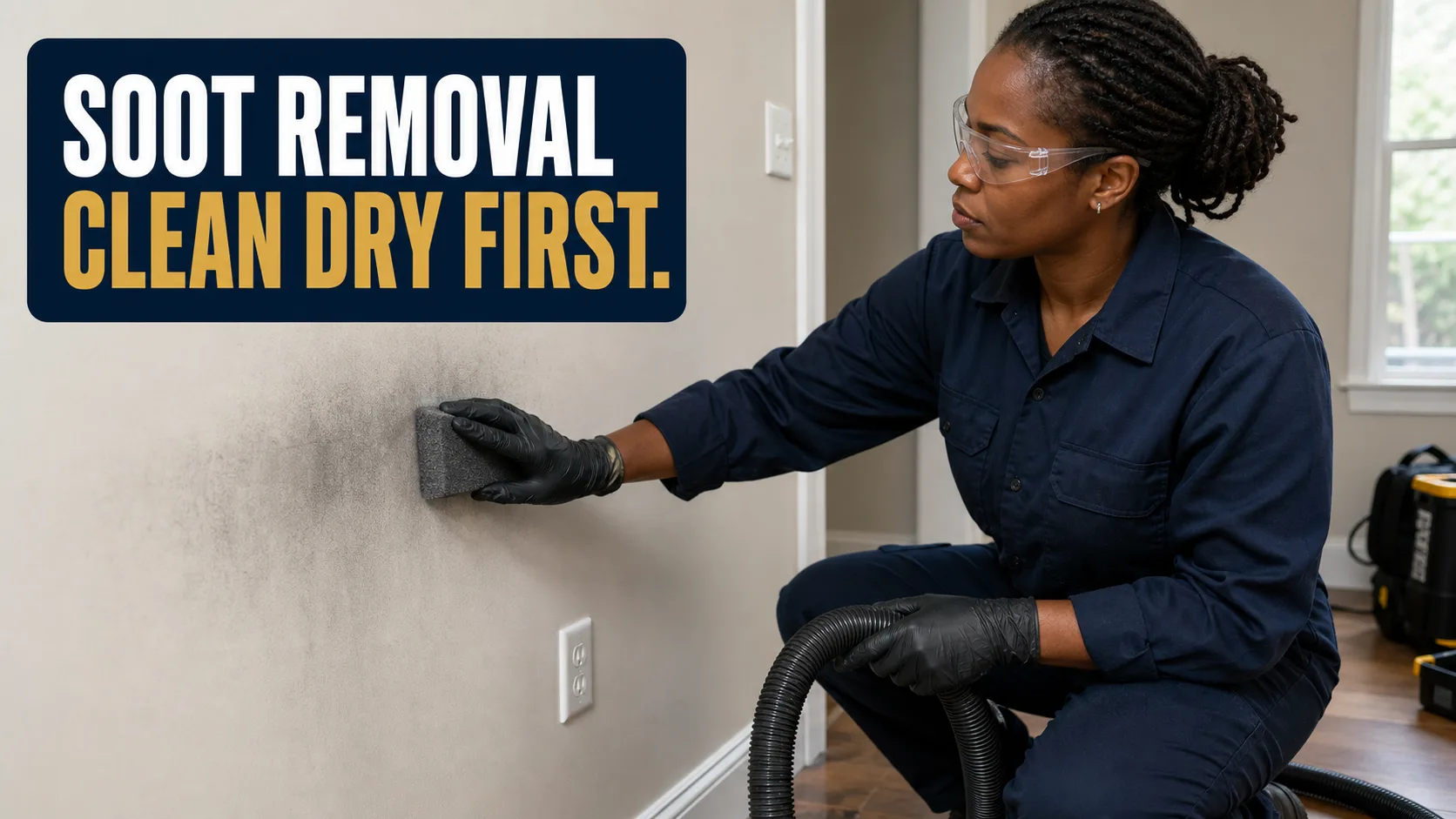
Remove soot dry before you ever go wet. HEPA-vacuum the loose soot without touching the surface, then lift the rest with a dry chemical (soot) sponge using straight, non-overlapping strokes. Only after that do you clean with a degreaser, and only then consider sealing and repainting. Wiping soot with a wet rag first is the single most common mistake — it grinds the acidic residue into the paint and sets a permanent stain. Not sure it's salvageable? Text a photo to **(346) 271-7004**.
Soot is acidic, oily, and abrasive
Soot isn’t dust. It’s a fine solid made of unburned carbon and oils, it’s mildly acidic, and it starts etching and staining surfaces within hours. Those three properties are why it behaves the way it does: the acid attacks finishes, the oil soaks into porous paint, and the abrasive particles scratch when dragged. Any cleaning method has to work with that, not against it.
Etching starts on soft metals within a day and on painted drywall within a few days. It does not reverse.
Where soot lands, and the spots people miss
Ceilings and high surfaces — the heaviest loading:
- Directly above the fire and along the path to the nearest doorway
- Crown molding, tops of door frames, the upper third of every wall
- The upward faces of fan blades and light fixtures
Cool surfaces and airflow paths:
- Exterior walls, which run cooler than interior partitions
- The wall behind hanging art — a clean rectangle once the frame comes off
- Above and below every register
The places people never check: inside closets, cabinets, and the range hood.
What you can check yourself before anyone arrives
- Do one dry test stroke. White cotton cloth, one light pass, low on a wall behind a door. Grey on the cloth is residue. Do not stroke twice, and do not use water.
- Take a frame off the wall in the worst room. The clean rectangle shows how loaded that wall is.
- Check the registers. Soot fanning above a vent puts the ducts in scope.
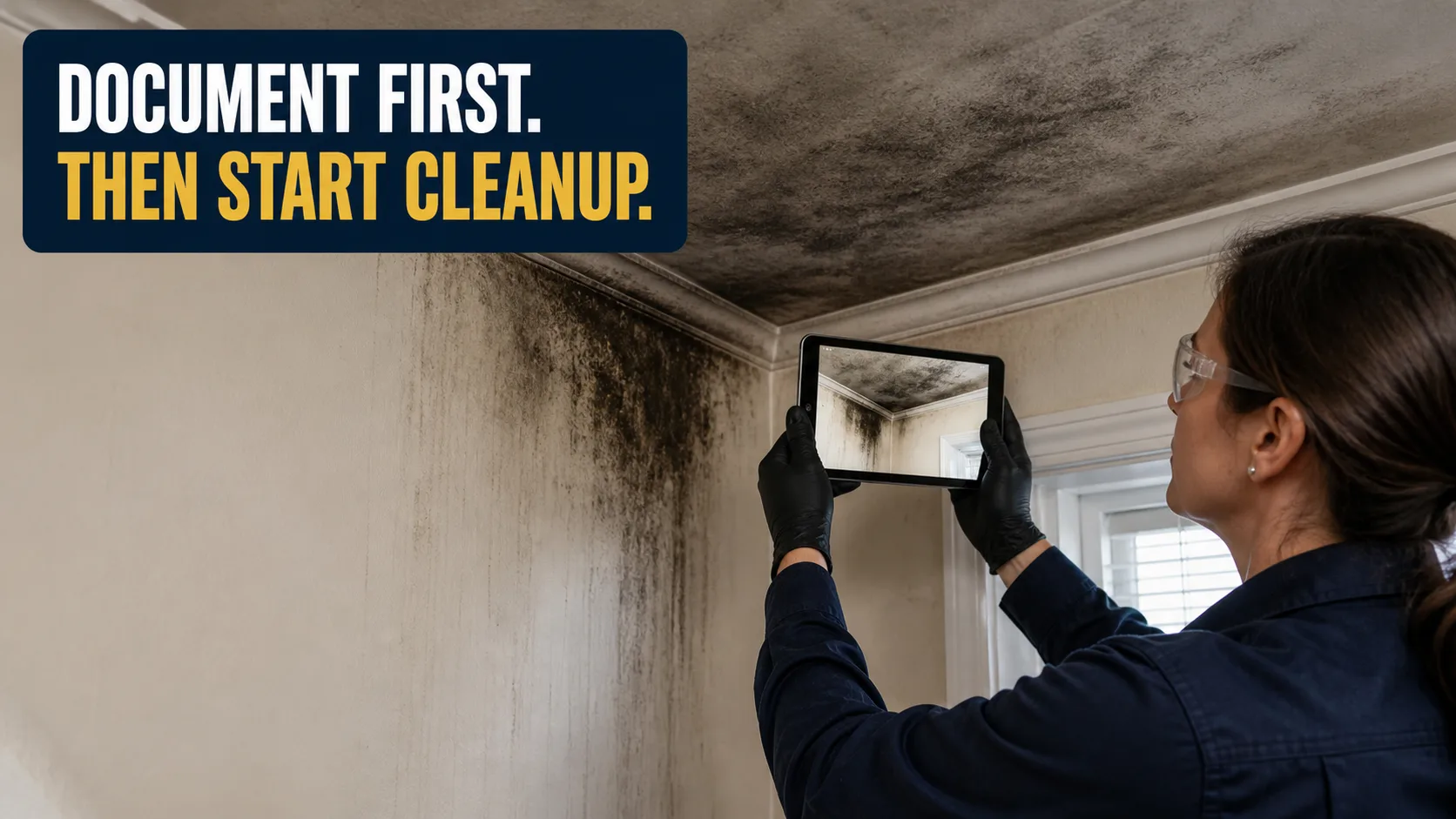
- Photograph every finding with the date stamp on, before anyone cleans.
Why dry comes before wet
A wet wipe on fresh soot does the opposite of cleaning. The water and cleaner dissolve the oily residue and carry it deeper into the pores of the paint, and the wiping motion spreads it into a wider smear. What was a removable film becomes a set-in stain.
So the order is fixed:
- HEPA-vacuum loose soot with the nozzle held just off the surface.
- Dry chemical sponge to lift the bonded residue — straight strokes, turned or replaced often so you’re not re-depositing soot.
- Wet clean with an appropriate degreaser, only after the surface is dry-clean.
- Seal and repaint stained or porous areas with the right primer.
Three surfaces bend that rule. Popcorn ceilings take the HEPA pass and nothing else — a sponge pulls the texture off with the soot. Wood trim takes a solvent, never water. Metal fixtures get cleaned first, because acid etch on chrome is measured in hours.
When a wall can be saved
Speed decides a lot of it. Soot removed dry within the first day or two, before the acid etches and the oil soaks in, leaves most painted drywall cleanable. What tends toward replacement: drywall saturated by firefighting water, protein residue that has yellowed the finish, and surfaces left sooty for days. Getting the dry pass done early is what keeps the replace list — and the claim — smaller.
How professional soot removal services run the job
- Document first, room by room — the record supports the fire damage insurance claim.
- Contain and set negative air so lifted soot does not land in clean rooms.
- Shut down and cover the HVAC — registers sealed, filter bagged.
- Dry pass, top down, then a wet pass matched to residue type.
- Dry the firefighting water in parallel, because wet board cannot be sealed and mold does not wait.
- Seal, then deodorize as the finish — never as the substitute, per smoke smell removal.
What does soot removal cost?
No honest company gives one number before walking the house. The variables:
- Square footage carrying residue, ceilings included
- Residue type. Protein and wet smoke need several passes and specialty chemistry
- Ceiling height and texture. Vaulted ceilings mean lifts
- How long it sat, since etched surfaces get sealed rather than cleaned
A single room commonly runs in the high hundreds to low thousands. Whole-house cleaning with sealing runs several thousand and up.
Soot removal, smoke mitigation, and the painter
- Soot removal is mitigation: residue lifted in a fixed order, documented, with the HVAC and the water handled alongside it.
- Smoke mitigation is the wider scope — contents, odor, drying, the file.
- The painter comes last, once surfaces are clean and sealed.
Priming over uncleaned residue looks finished for a month, then the stain comes back. The same line separates mitigation from restoration and remediation on the water side.
How long does soot removal take?
A single room is usually one to two days. A whole house runs three days to two weeks, depending on residue type and how much has to be sealed rather than cleaned. Inspection decides the end — a clean surface passes a fresh dry-cloth stroke, and sealing starts only once the material meters dry.
Does insurance cover soot removal?
As part of a fire loss, generally yes. Cleaning, sealing, and the repainting that follows are ordinarily within the scope of restoring a property to pre-loss condition on a policy where fire is a covered peril.
What gets questioned is scope, not principle — cleaning charged for rooms with no documented residue. That is why the record comes before the first sponge, and why actual cash value versus replacement cost is worth reading early.
Don’t paint over it
Painting over soot without removing and sealing it is a temporary illusion. The residue and its odor bleed back through fresh paint within weeks. Clean first, seal the stained and porous spots, then paint.
The free things worth doing tonight
- Turn the HVAC off. Every cycle spreads residue into rooms that are still clean.
- Photograph every wall and ceiling with the date stamp on, before anything is touched.
- Take down the wall art and photograph the clean rectangles behind it.
- Do not wipe — not a dry rag, not a damp one, not a magic eraser.
- Note the date and time of the fire. Residue age decides cleanable versus sealable.
Where DIY soot removal ends and we begin
A single sooty wall in a garage is a dry sponge and an afternoon, and we will say so rather than sending a crew. What is not a DIY job is a whole house, a ceiling, or anything with firefighting water underneath.
TruePoint Restoration is not a painter or a rebuild contractor. We do the mitigation — containment, cleaning in order, drying with readings, sealing, and the file.
If the fire was put out with water, there’s a water loss under the soot too, and mold starts within 24 to 48 hours in Houston humidity. We handle both. Call or text (346) 271-7004. We serve Pearland and the Greater Houston area.