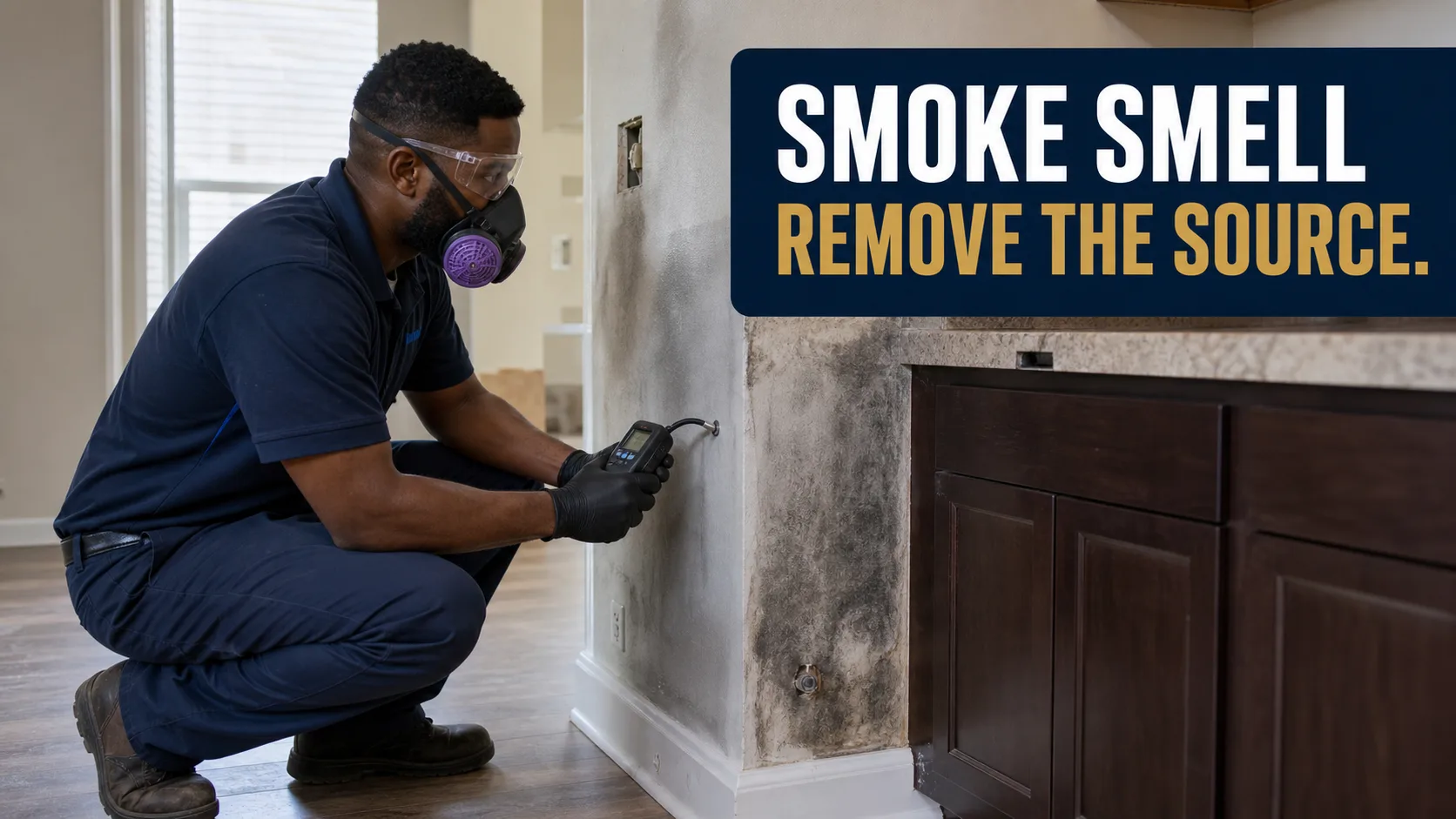
Smoke odor lives in the residue and in porous materials, not in the air — so you remove the source, not just the smell. Clean soot off every surface it reached, clean or remove materials that absorbed odor (carpet, upholstery, insulation, some drywall), treat the air and structure with hydroxyl or ozone, then seal what cleaning couldn't fully reach. Air fresheners and painting over it never hold because the source is still there. For odor that keeps coming back, call or text **(346) 271-7004**.
The smell isn’t in the air — it’s in the house
The reason smoke odor is so stubborn is that it doesn’t float; it settles. Smoke particles bond into drywall, carpet, upholstery, insulation, and the insides of ducts and cabinets. What you smell in the air is being released from those materials continuously. Treat the air alone and you’ve done nothing to the source, so the smell comes right back.
That’s the whole principle of odor removal: get the source out, then treat what’s left.
Houston humidity speeds the release, which is why a house that seemed manageable in February turns sharp in June.
Where the smoke smell is actually hiding
Porous materials that absorbed it:
- Carpet and pad, upholstery, mattresses, curtains
- Drywall, and the paper facing behind the paint
- Clothing, bedding, books, and paper
Enclosed volumes that hold it:
- Closets, cabinet interiors, drawers, the backs of pantries
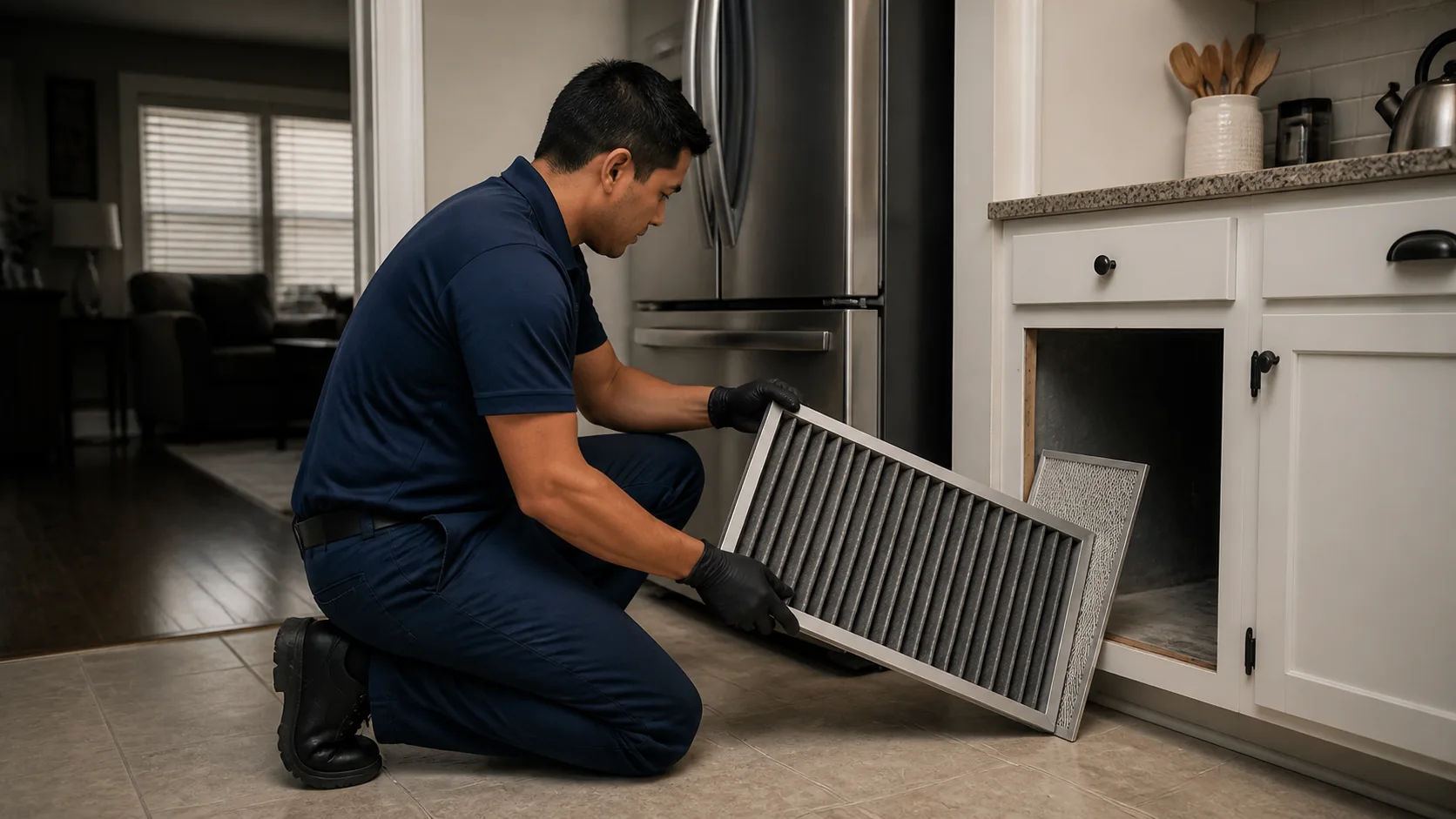
- The HVAC system — filter, return, plenum, coil, ducts
Surfaces still carrying residue: ceilings and anything painted that has not been dry-cleaned and sealed — see soot removal.
Why the quick fixes fail
- Air fresheners and fans mask the smell for hours and change nothing about where it comes from.
- Painting over soot traps uncleaned residue behind new paint, and the odor bleeds back through within weeks.
- One ozone treatment on a house full of soot knocks the smell down until the machine turns off, then it returns from the residue that was never removed.
Each of these skips the step that actually matters.
What you can check yourself before calling anyone
- Close the house up for four hours with the HVAC off, then walk in from outside. Your nose adapts to a smell you sit in — a cold entry is the only honest test.
- Smell inside a closet and a cabinet. Trapped air concentrates odor.
- Pull the HVAC filter. Grey loading means the ducts are part of the problem.
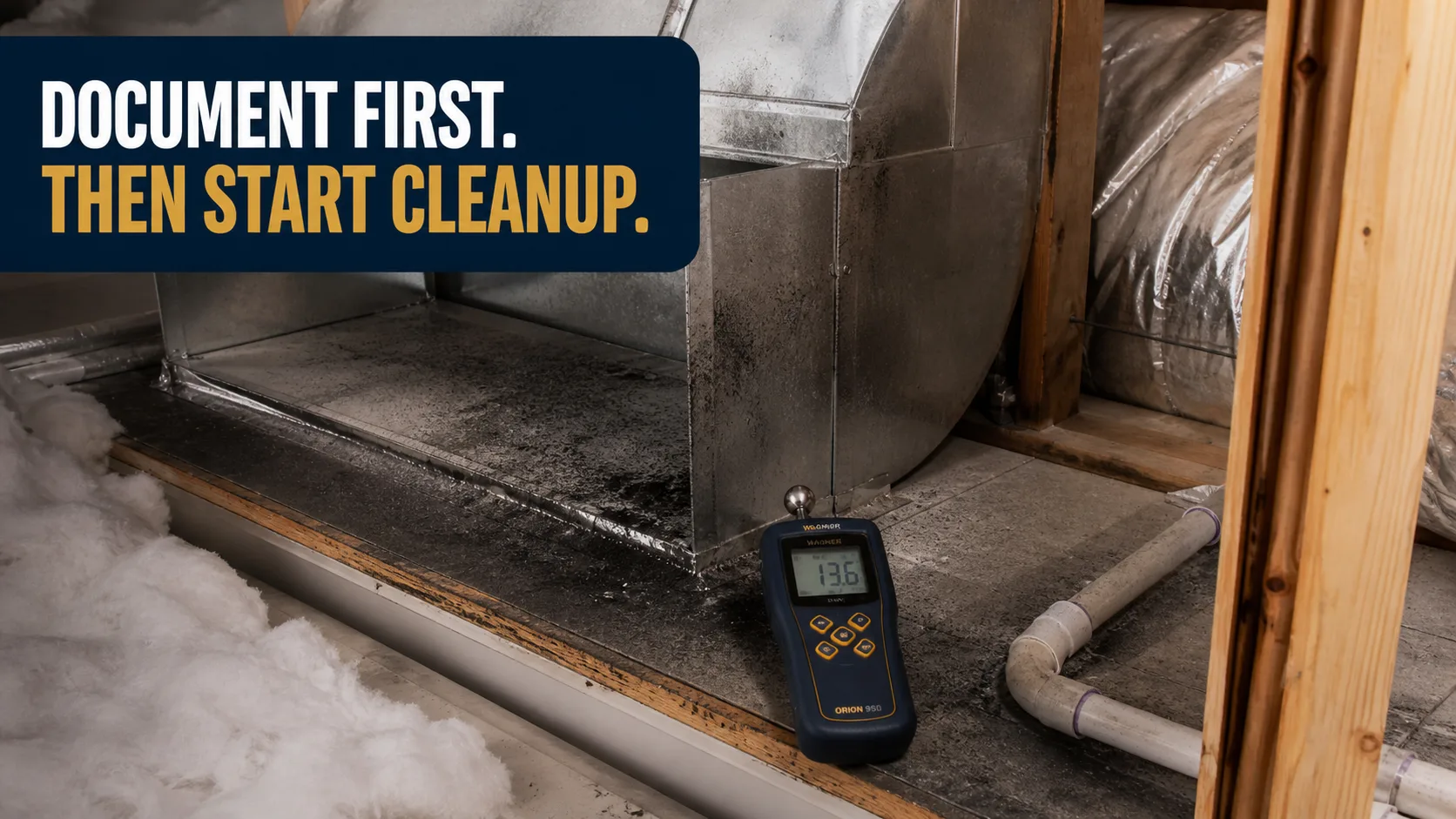
- Photograph what you find with the date stamp on, and log which rooms smelled worst. That list becomes the scope.
What actually removes odor
Odor removal is the same sequence as the rest of fire cleanup, finished with air treatment:
- Clean the source. Remove soot and residue from every surface it reached.
- Address porous materials. Clean what can be saved; remove carpet, pad, insulation, and upholstery that absorbed odor too deeply.
- Treat the air and structure. Hydroxyl or ozone to break down what’s left in the air and on surfaces.
- Seal. Prime and seal surfaces that can’t be fully cleaned so any remaining odor stays locked in.
Do it in that order, soon after the fire, and most homes come back fully. Skip to step three and the smell always returns.
A professional smoke odor removal service adds equipment: HEPA scrubbers, hydroxyl generators that work in an occupied space where ozone cannot, thermal fogging, and duct decontamination.
How long does fire smoke smell last in a house?
Untreated, it lasts for years. Smoke residue does not break down on its own, and a house with soot in the ducts still smells on a humid day a decade later.
Treated properly, a light contained smoke event is clear in three to seven days, and a whole-house loss runs two to four weeks. A sealed-house test decides the end, not the calendar.
Why does my house smell like smoke when there was no fire?
- A previous fire in the building, cleaned cosmetically and never deodorized at the source.
- Furnace or water heater puffback — a combustion appliance misfiring into the ducts.
- An electrical fault. A hot-plastic smell with no visible source means shut the breaker and call an electrician the same day.
- Third-hand smoke from previous occupants, bonded into drywall and cabinets.
How do you get fire smoke smell out of clothes?
Do not run smoke-exposed clothing through a home washer on the first pass. Hot water sets the odor into synthetic fibers and leaves residue in the drum.
Bag and separate items before they move, air them outdoors on a dry day, then wash cold with an enzyme additive or white vinegar and air dry — a hot dryer sets whatever is left. Heavily exposed items go to a restoration textile cleaner.
What does professional smoke odor removal cost?
There is no flat rate. What moves the price:
- How many rooms carry odor, usually more than carry visible residue
- Whether the source can be cleaned or has to be removed — pulling carpet, pad, and insulation is a different scope from wiping surfaces
- Residue type. Protein and wet-smoke odor takes multiple passes
- How long it has sat, since old odor has migrated deeper and needs sealing
Room-scale deodorization after a small fire commonly runs in the high hundreds to low thousands. Whole-house odor removal runs into five figures.
Odor removal, smoke mitigation, and the rebuild contractor
- Smoke and soot mitigation removes the residue, dries the firefighting water, and handles the contents. Most of the odor leaves with the source — full scope in smoke damage cleanup.
- Deodorization is the finishing step inside that scope.
- The rebuild contractor replaces drywall, paint, and flooring afterward.
A painter is not an odor removal service. That confusion is how a room gets paid for twice.
Does insurance cover smoke odor removal?
Generally yes, as part of the fire loss, because odor removal is part of returning the property to its pre-loss condition. What gets challenged is odor work on an invoice with no documented source behind it.
Photographs of residue, an itemized list of what was removed, and readings on any firefighting water connect the deodorization line to the covered peril. Detail is in the fire claim guide.
How to get fire smoke smell out of a house fast — tonight, for free
- Turn the HVAC off at the thermostat. Every cycle redistributes odor and residue.
- Change the filter, and bag the old one as evidence of duct involvement.
- Open windows only when the outside air is drier than the inside. In a Houston summer it usually is not.
- Do not paint, spray, or shampoo the carpet. Every one of those seals the problem in.
The water connection
If firefighting water soaked into materials, that moisture feeds both mold and lingering odor — and mold starts within 24 to 48 hours in Houston humidity. Handling the water is part of handling the smell. Text a photo to (346) 271-7004 and we’ll tell you what it needs.
Damp drywall will not hold a sealer, so deodorizing a wet wall is work you pay for twice. A musty smell under the smoke is a different problem, and telling them apart takes a meter, not a nose.
Where home remedies end and we begin
TruePoint Restoration does not repaint or rebuild your house, and we are not going to sell you an ozone machine for a smell a filter change would fix. What we do is find the source, remove it, dry what the fire department left behind, treat the air and the structure, seal what cleaning could not reach, and document it.
If the smell keeps coming back after you have cleaned, that is a source problem and it will not resolve itself. Call or text (346) 271-7004. We serve Pearland, Manvel, Friendswood and the Greater Houston area.