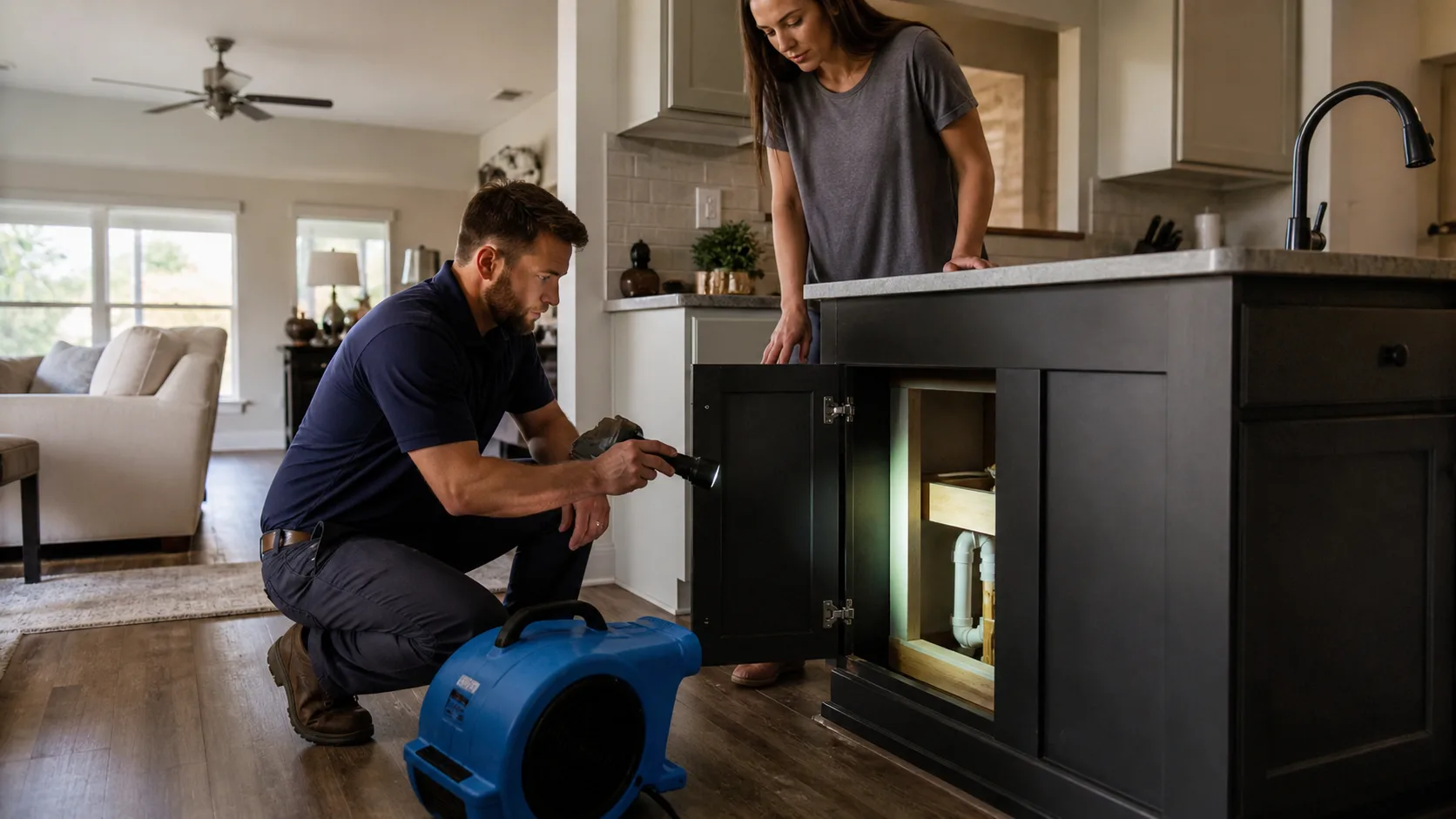
Ask a mitigation contractor to assess the cabinet base and accessible adjacent materials, identify any access limits, and explain the proposed cleanup or drying. A plumbing repair addresses the source; it does not establish the condition beneath a built-in cabinet. Cabinet repair, appliance work, and reconstruction may require separate contractors.
Burst pipe, leak or flood? We stop the damage, dry the structure and document every step.
The leak has stopped, but the cabinet base looks swollen or the floor edge is still a concern. This is the point to ask what happened to the materials around the plumbing, rather than stop at the repair invoice. Water mitigation and fixing the leak are separate parts of the job.
TruePoint Restoration serves Pearland and Greater Houston. Call (346) 271-7004 to describe water damage around a kitchen cabinet and ask about an assessment. Share what the plumber or appliance professional has already found.
When comparing a water damage restoration service for this problem, ask whether the proposed scope explains the cabinet area and any limits on access.
Why is the source repair only part of the question?
A source-repair professional can explain the repair performed on the plumbing or appliance. That record does not automatically describe the cabinet, floor, or wall affected by the release. Ask each contractor which part of the problem its agreement covers.
Be specific about what you noticed. Water inside a sink cabinet, a changed floor edge beside the dishwasher, and staining behind a toe kick describe different locations. Report those observations without trying to determine the full extent yourself. Let the assessment identify what can be checked and what remains unknown.
If the source is still unresolved, use the relevant guide: kitchen faucet leaks, trap leaks, or dishwasher leaks. Tell the mitigation contractor if the source continues to release water.
What should the cabinet-area assessment explain?
The assessment should explain which materials were checked and where access was limited. The visible interior of a sink cabinet is one location. The floor beneath the cabinet and the wall behind it are separate parts of the assessment.
Useful questions include: was the adjacent floor checked, what is known about the wall behind the cabinet, and is further access proposed? If removal is suggested, ask what finding supports it, who will perform it, and what separate repair work may follow.
Do not pull out an appliance or remove a built-in panel to prepare for a visit. Plumbing, electrical connections, countertops, and finishes can complicate access. Have the appropriate professionals explain the proposed work before it begins.
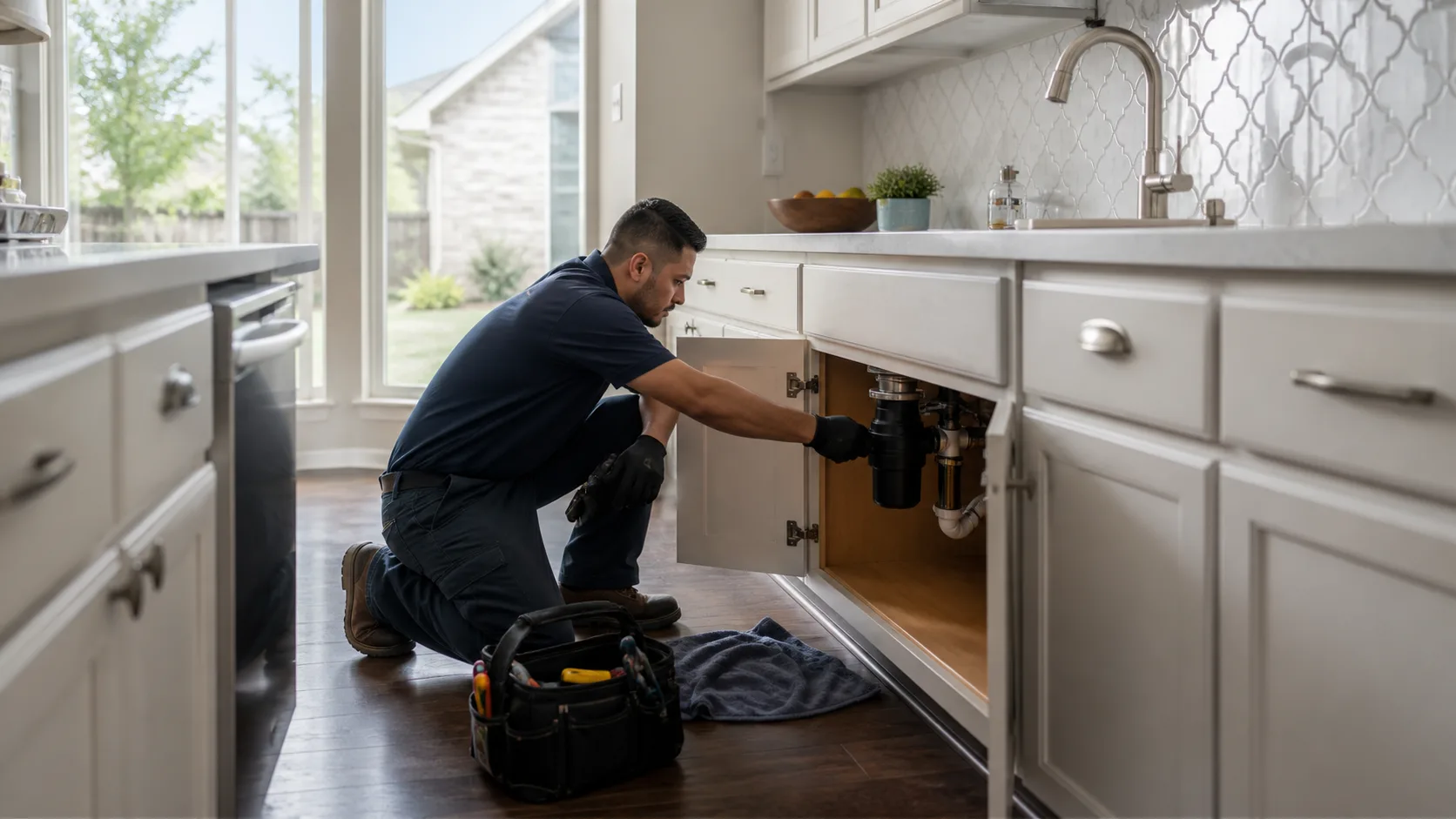
Can cabinets be dried in place?
Ask for a material-specific assessment rather than a blanket promise. The EPA’s water-damage table treats materials differently and calls for checking the underflooring beneath affected finishes. A generic “leave the doors open” instruction does not establish the condition of the surrounding assembly.
If drying in place is proposed, ask what can be accessed and monitored. If removal is proposed, ask which components are involved and how the condition will be documented. An explanation tied to the actual materials is more useful than assuming every wet cabinet can be saved or every wet cabinet must be replaced.
Do not apply heat or drill openings based on a general article. Let the contractor explain the plan for your property and identify any separate trade needed for access or repair.
What do swelling, staining, or odor tell me?
They are observations to report. They do not, by themselves, establish the cause, full extent, or repairability of the damage. Take a safe photo and note the location and when you first noticed the change. Share any history of earlier leaks without assuming that every mark came from the newest event.
If mold is suspected, avoid disturbing the area and tell the company before work begins. The EPA’s homeowner moisture guide warns that investigating hidden mold can disturb it and advises caution. Ask whether the assessment calls for a separate specialist.
A cabinet repair specialist may need to assess how the material condition affects replacement or finishing options. Keep that decision separate from the mitigation scope so you know who is responsible for each part of the work.
How should drying and repair work be coordinated?
Keep the source repair, mitigation and cabinet repairs clearly described in their agreements. Share the relevant work records with the next contractor and identify who is responsible for each remaining task. That prevents an equipment pickup from being mistaken for a finished kitchen repair.
Before a new cabinet base, flooring, or wall finish covers the area, give the repair contractor the relevant work records. Ask it to assess its own scope and installation requirements. TruePoint’s water mitigation does not include plumbing, appliance repair, or reconstruction.
Our drying-time guide explains why a set number of days should not replace assessment of the materials. Ask what supports completion for your particular job.
What should I have ready when I call?
Give the property address, the apparent source, whether it is still active, and what work has been completed. Describe the affected cabinet and nearby floor or wall from a safe location. Mention any electrical concern, suspected contamination, or area that cannot be accessed.
Call (346) 271-7004 to ask about current assessment availability. The Pearland water restoration page explains the local service scope. The next step is a clear assessment and proposed plan for the affected materials, with the leak repair and any later reconstruction handled by the appropriate trades.