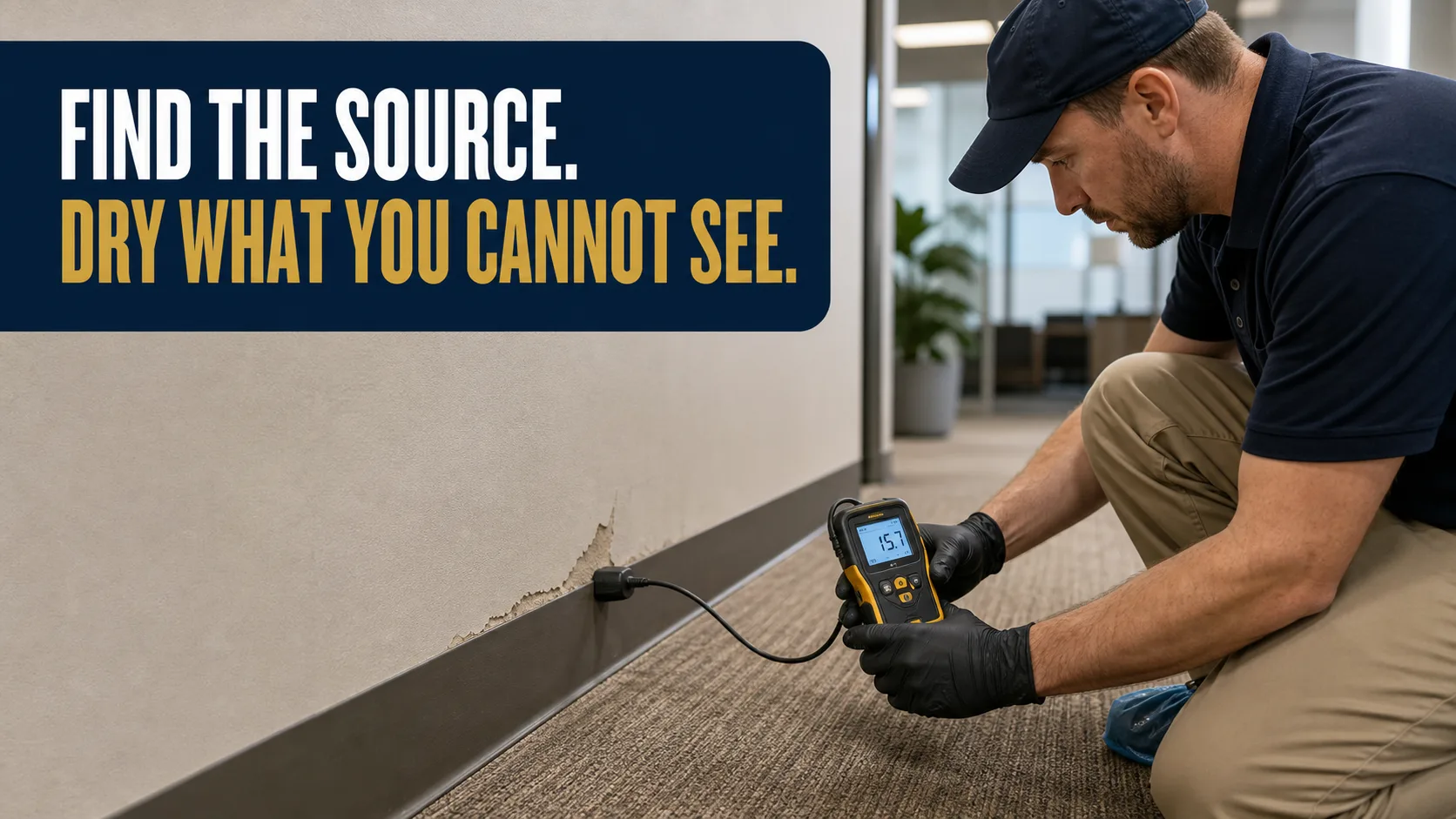
Wet carpet needs an assessment of the water source, carpet and backing, padding, and the floor beneath. Some clean-water damage may be addressed with extraction and drying, while contamination or material damage can change the scope. A dry-feeling carpet surface does not establish that the underlying layers are ready to keep or cover.
Burst pipe, leak or flood? We stop the damage, dry the structure and document every step.
Water on carpet often raises an immediate question: can we dry it and keep it? The answer needs more than a look at the pile. Ask about the backing, padding, floor beneath, and adjacent materials before deciding that a carpet-cleaning visit will resolve the damage.
TruePoint Restoration provides water mitigation in Pearland and Greater Houston. Call (346) 271-7004 to describe the leak and ask about an assessment. Tell us whether the source is known and whether water is still entering.
When you call for a water damage restoration service, explain that the concern includes the layers beneath the carpet, rather than a routine surface-cleaning appointment.
What should be checked besides the carpet surface?
The EPA’s water-damage cleanup guidance discusses extraction and drying for carpet and backing after clean-water damage. It also states that the subfloor beneath carpeting needs cleaning and drying. That makes the layers below the visible surface part of the assessment.
Ask which parts of the carpet assembly have been checked and how the findings affect the proposed work. If padding, a transition, a closet, or an adjacent wall is outside the assessment, ask why. You should be able to understand what was evaluated without lifting carpet or opening materials yourself.
A scope that describes one room should also explain its boundaries. Tell the contractor if you saw water crossing a doorway or reaching a built-in cabinet. That history can help frame the assessment, although it does not establish how far the water actually traveled.
How does the source change the decision?
The assessment starts with where the water came from. Describe what you saw, including whether a supply line failed, an appliance discharged water, or outside flooding entered the home. Clear-looking water is not enough to establish that a material is suitable to dry and keep.
The CDC’s floodwater safety guidance explains that floodwater can contain sewage, chemicals, and other hazards. Keep out of unknown floodwater and tell the contractor about that concern before cleanup begins.
If the water came from a drain or sewer, read the sewage-backup cleanup guide. Do not assume a drying approach discussed for a small clean-water leak is appropriate for that situation.
Can the carpet and padding always be saved?
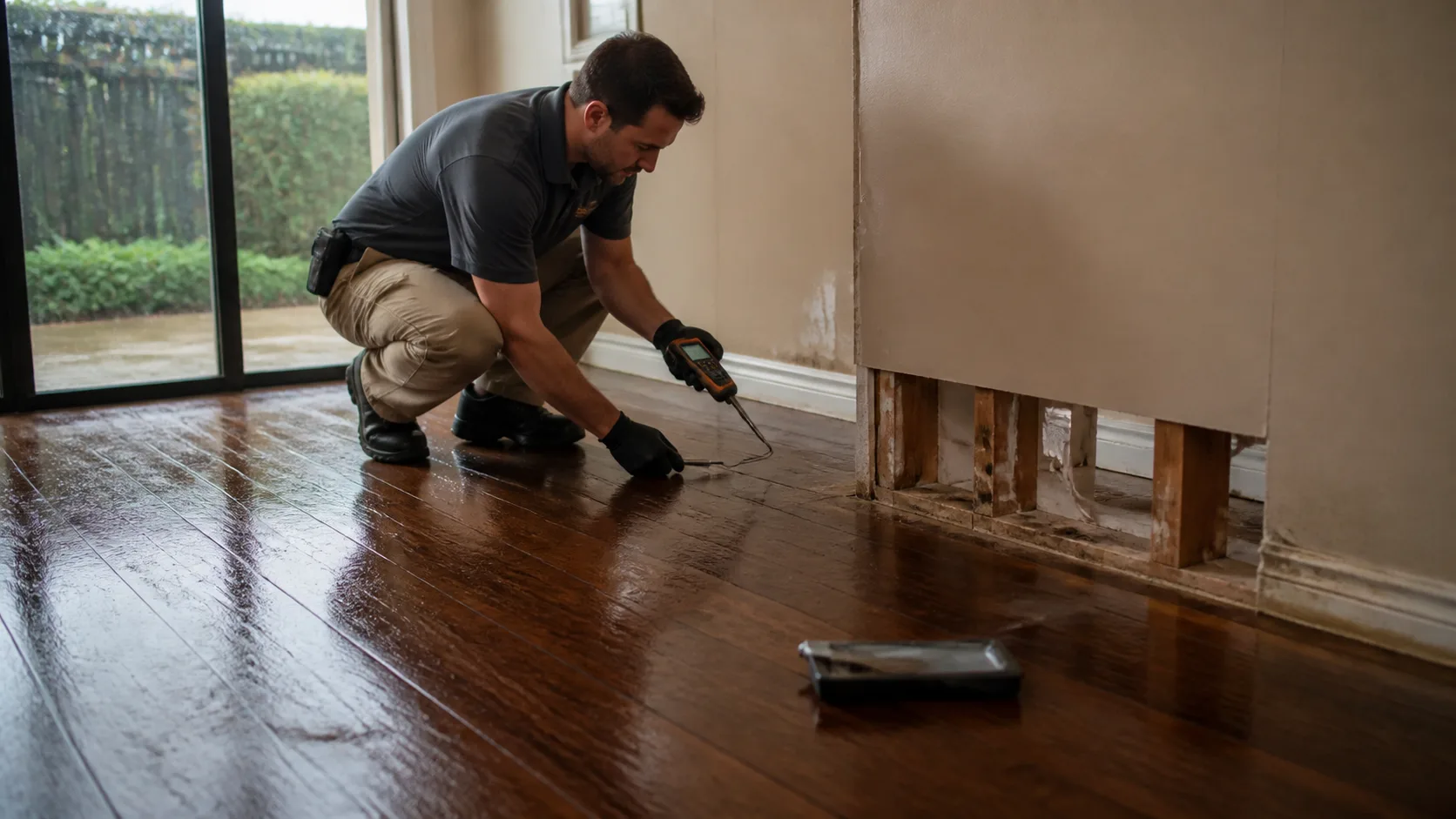
Some carpet assemblies need removal or replacement; others may be candidates for drying. The decision needs an explanation of the source and the condition of each affected layer. If removal is proposed, the scope should identify what is coming out and what separate flooring work will follow.
Be clear about the difference between mitigation and replacement. Removing affected material or drying a subfloor does not include supplying new carpet unless the agreement says so. TruePoint’s mitigation work is separate from flooring installation and reconstruction.
If opinions differ, request the findings behind each scope. Comparing only the total price can hide a difference in what the companies are proposing to assess, remove, or monitor. Ask for the explanation before deciding that one estimate covers the same work as another.
Is a carpet cleaner the same as a water mitigation contractor?
A routine carpet-cleaning appointment may cover the surface treatment of the carpet. A water-damage assessment also needs to consider the affected layers and surrounding materials. Explain the leak when you arrange help so the provider can tell you whether its service covers that work.
The proposed mitigation scope should explain whether extraction, additional assessment, drying, cleaning, or removal is included. Ask who will assess progress and how you will be told when that scope is complete. Our who-to-call guide helps separate those roles from source repair.
Do not use an ordinary household vacuum on wet carpet. Avoid rearranging equipment or starting household fans when the source and conditions have not been assessed. Explain any electrical or contamination concern when you call.
What if the carpet smells musty after the visible water is gone?
Tell the company what you noticed and when. The EPA’s homeowner guide notes that moldy porous materials, including carpet, may need to be discarded because cleanup can be difficult. A fragrance or surface treatment does not answer whether the material is suitable to keep.
Do not pull up suspect carpet yourself to search for mold. Ask whether the findings require a specialist or a different cleanup scope. The musty-smell article explains how to describe that concern without assuming the cause.
What should I ask before replacement flooring goes in?
Request an explanation of the mitigation work completed, the materials assessed, and any remaining access limits or separate repair needs. Give the flooring contractor the relevant records and let it assess its own installation requirements. Do not treat a dry-looking carpet surface as approval to cover the floor beneath.
For local help, call (346) 271-7004 and ask about assessment availability. The Pearland service page explains TruePoint’s water mitigation role. Start with the source, the affected rooms, and what work is already complete so the next conversation addresses the remaining damage.