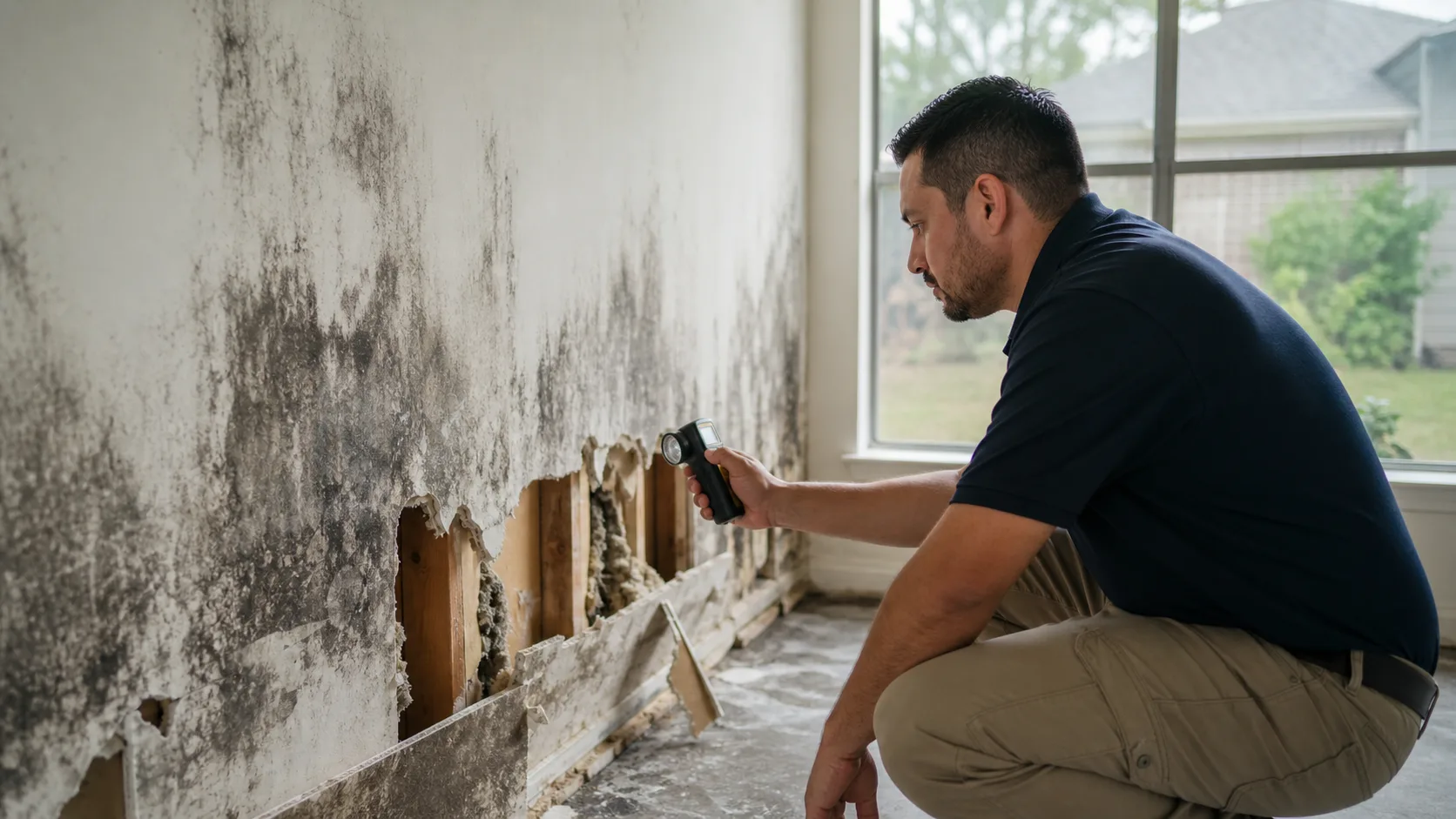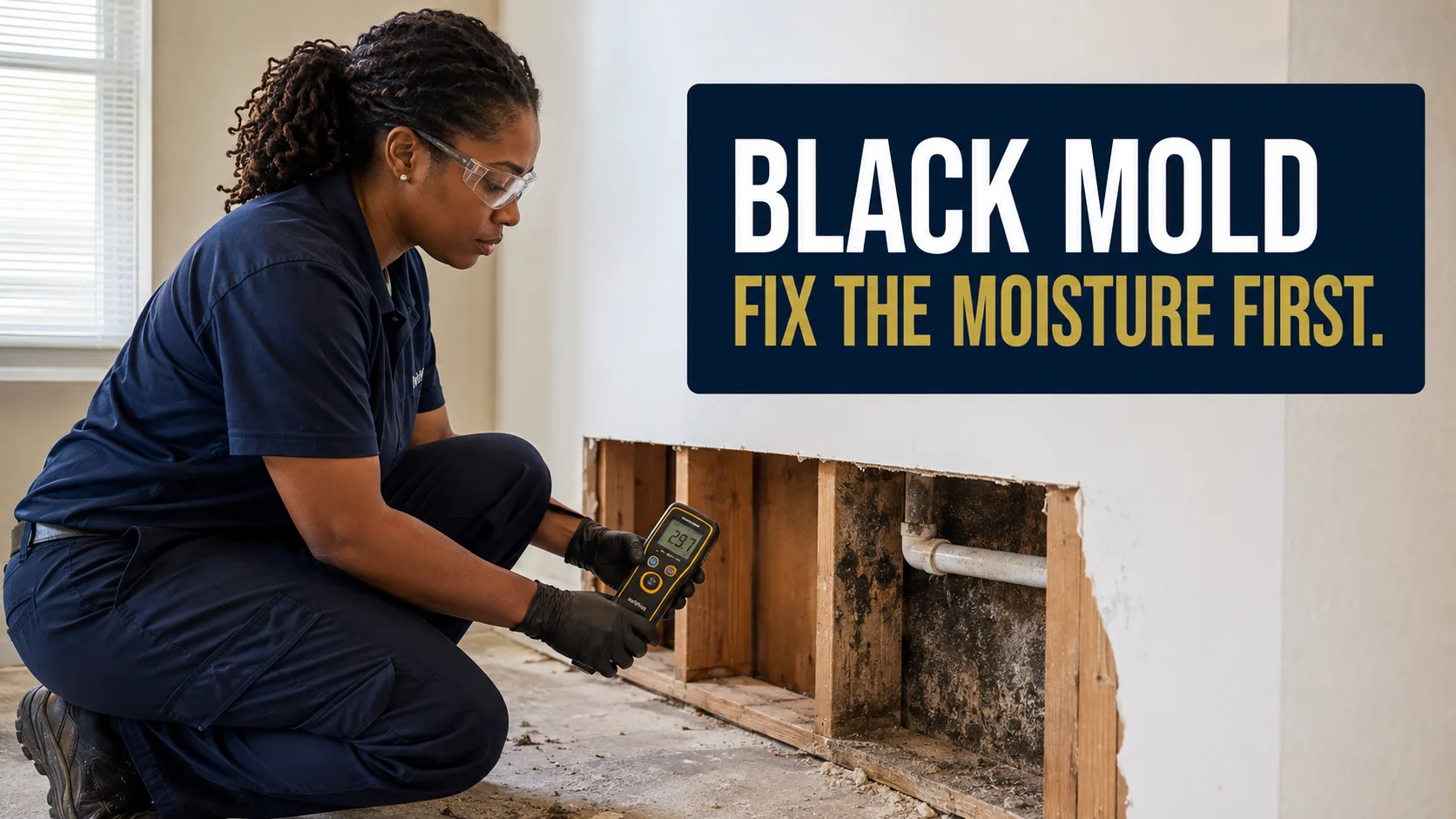
Any mold growing on wet materials should be removed, and people with asthma, allergies, or weak immune systems can react to it. But **"black mold" isn't a single species, and color alone doesn't tell you the risk** — a lot of the fear online is marketing. The responsible response is the same regardless of color: find and fix the moisture, dry everything completely, and remove contaminated porous material. If you have mold after a water loss in Houston, call **(346) 271-7004** and we'll tell you honestly what it needs.
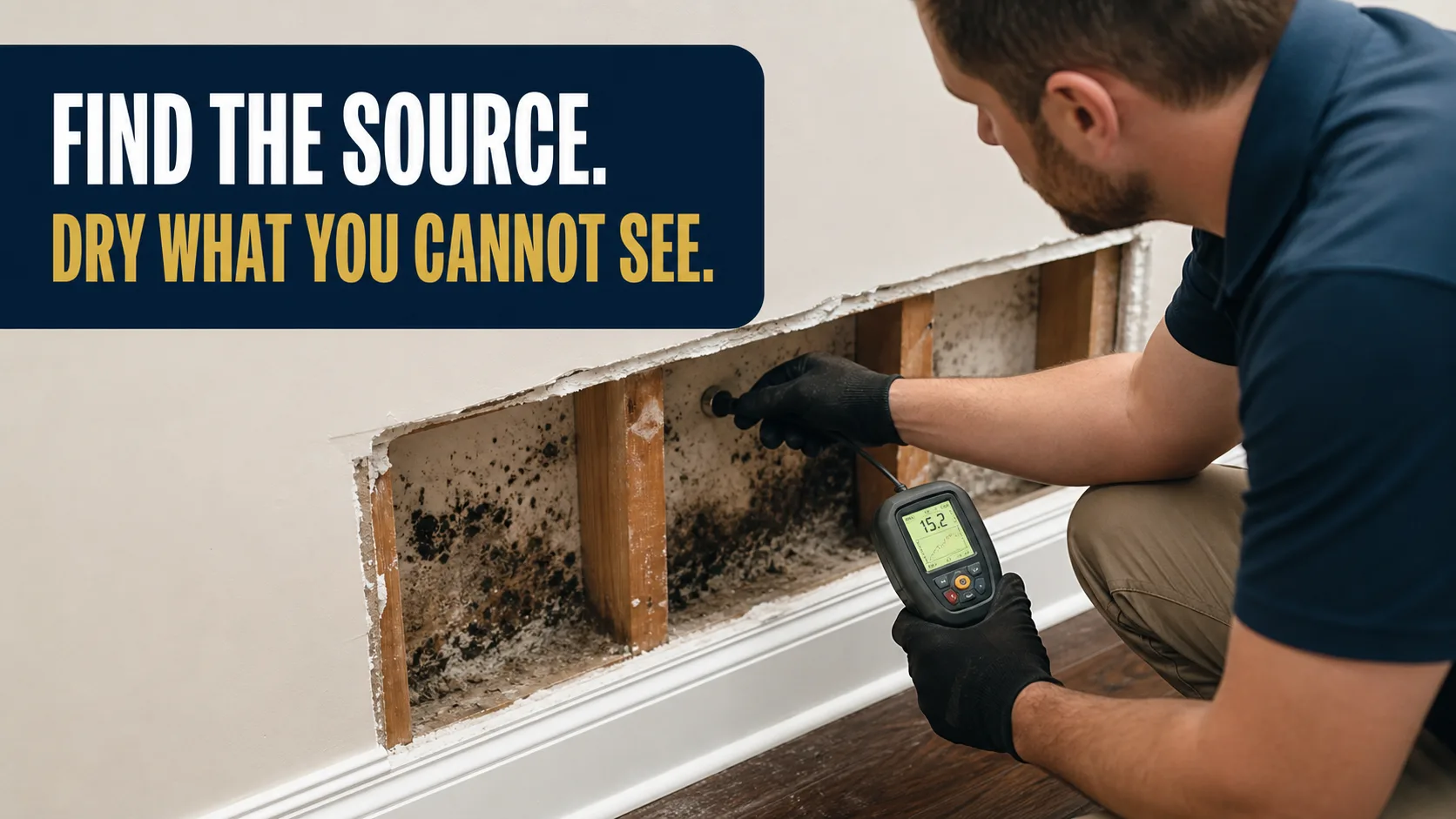
Cutting through the “black mold” hype
“Black mold” gets used as a scare term, but it isn’t a precise diagnosis — many molds look dark, and color doesn’t reliably indicate species or toxicity. What matters isn’t the color; it’s that mold is growing indoors on materials that stayed wet. That’s a moisture problem, and it’s fixable. The right mindset is practical, not panicked: address the water, remove what’s contaminated, and protect the people who are sensitive to it.
The health side, honestly
Indoor mold can trigger allergy- and respiratory-type reactions, especially in sensitive people:
- Nasal congestion, coughing, wheezing
- Throat, eye, and skin irritation
- Headaches
- Symptoms that are worse indoors and better when you leave
People with asthma, allergies, or compromised immune systems tend to react more. Persistent symptoms that ease away from home are a signal worth investigating for an indoor source.
Stain or mold?
A water stain is flat discoloration; mold is textured — fuzzy, slimy, or speckled — and usually comes with a musty smell. But looks don’t tell you the species or the danger, and most early mold hides inside walls and under flooring. If materials stayed wet after a leak, treat it as a mold risk and meter the area, whether or not you see classic growth. The full picture is in mold after water damage.
Warning signs mold is behind a surface that still looks fine
Most growth after a water loss happens where nobody can see it — the back side of drywall, the underside of a subfloor, the cavity behind a cabinet run.
The room is telling you before the wall does:
- A musty, earthy smell that is strongest when the room has been closed up all day
- Air that feels heavier or cooler in one room than the rest of the house
- Symptoms that ease within an hour of leaving the house and return when you come back
The materials are telling you:
- Drywall that is soft, spongy, or slightly domed at the bottom four inches
- Baseboard pulling away, or paint bubbling in a band along the floor line
- Grout, caulk, or trim discoloring in one spot and spreading outward over weeks
The mechanical side is telling you: a musty smell that arrives with the air handler starting, or a filter loading grey faster than it used to. In Houston the air handler is usually in the attic, so a supply-side smell means the wet material is upstream of every room in the house.
What you can check tonight
None of this needs equipment, and all of it is safe to do without disturbing growth.
- Walk the house nose-first with the AC off for twenty minutes. Air movement dilutes odor. With the fan idle, the smell concentrates in the room that is producing it.
- Press the bottom four inches of drywall in any room that had water. Soft, cool, or slightly giving means the cavity behind it is still wet.
- Pull one baseboard, gently, in the worst room. The back of the baseboard and the drywall behind it show growth long before the painted face does.
- Open the cabinet under the sink and look at the back corners with a flashlight, not the front. Cabinet kicks sit on the subfloor and hold water where you never look.
- Check the AC filter and the drain pan in the attic. Standing water in the pan feeds growth directly into the airstream.
- Do not sand, scrub, or blow air at anything you find. Disturbing growth aerosolizes it into rooms that are still clean.
- Photograph each finding with the date stamp on, close and wide, before anything gets cleaned or moved.
What to actually do
- Fix the moisture source. Mold that keeps getting fed comes back. This is step one, always.
- Dry everything completely — surfaces and the cavities behind them.
- Remove contaminated porous material (drywall, insulation, carpet) that grew mold; it can’t be cleaned truly clean.
- Protect sensitive people during the work, and get larger or hidden growth handled professionally.
For the cost side of professional removal, see mold remediation cost in Houston.
The 25 square feet that changes who can legally touch it
Texas regulates mold work, and the threshold that matters is area. Below roughly 25 contiguous square feet of affected material, a property owner or an ordinary contractor may generally handle it. Above that, the state’s mold assessment and remediation rules apply, and the work belongs to licensed people.
Three consequences that surprise homeowners:
- The assessor and the remediator have to be independent. The licensed consultant who writes the protocol and clears the job cannot be the company doing the removal. A firm that offers to inspect, remediate, and clear its own work on a licensed-size job is describing an arrangement the rules do not allow.
- A licensed project ends with a Certificate of Mold Damage Remediation. That document follows the property. Keep it, because a buyer’s agent will ask for it, and its absence on a house with a known mold history is a live problem at resale.
- Scope crosses the threshold faster than people expect. Twenty-five square feet is roughly a four-by-six patch, and a wall cavity that reads wet down a whole run of drywall passes it easily.
What removal costs, and what moves the number
Nobody can price this from a photo, and any number given before somebody has metered the walls is a guess. What actually moves it:
- Affected area, measured on the material rather than on the visible stain — growth spreads inside a cavity further than it shows on the face.
- Whether the job crosses the licensing threshold, because a licensed project adds a consultant’s protocol, containment, and post-remediation verification on top of the removal itself.
- What has to come out. Drywall, insulation, carpet pad, and cabinet kicks are removed rather than cleaned. Framing and subfloor are usually cleaned and dried in place.
- Access. An attic, a crawl space, or a wall behind a tiled shower costs more to reach than an open bedroom wall.
- Whether the source is still running. Remediating around an unrepaired leak means doing it twice.
A small contained job on one wall runs in the hundreds to low thousands. A licensed multi-room project with containment, removal, and clearance testing runs well into five figures. The line-by-line version is in the mold remediation cost breakdown.
How long it takes
A contained single-wall job is usually two to four days: containment, removal, cleaning, then drying the structure behind it. A licensed multi-room project runs one to three weeks, because the protocol, the containment build, the removal, and post-remediation verification each take their own time and the clearance sample has to come back before anything is closed up.
Readings decide, not the calendar. The structure has to reach dry standard on a meter, and on a licensed job an independent consultant has to sign off before reconstruction starts. A remediation that ends because the crew ran out of days is a remediation that gets done again.
The insurance note
Many Texas policies cap mold or require an endorsement, and cover it only when it stems from a covered sudden event addressed promptly. Long-neglected leaks are usually excluded. Fast, documented drying keeps a loss “sudden” — which is what protects coverage.
The free things worth doing tonight
- Close the door to the affected room and stop running fans in it, so nothing gets pushed into clean space.
- Turn the AC off if the smell tracks with the system running, and change the filter.
- Write the timeline — when the water event happened, when you found it, what you did the same day. Prompt action is the fact that keeps a loss in the covered category.
- Pull your declarations page and look for a mold endorsement, a mold sublimit, or a mold exclusion. Read it tonight, not after the estimate.
- Move anyone with asthma or a respiratory condition out of that room to sleep, and keep the door shut.
- Do not bleach it, paint it, or scrub it. Every one of those makes the next step harder and none of them reach the back of the material.
Where the mold assessor ends and we begin
TruePoint Restoration is a remediation and mitigation contractor. We do not write our own clearance on a licensed-size project — on those the independent consultant writes the protocol and verifies the result, and that separation exists to protect you. We also do not locate or repair pipes, service HVAC, do roofing or electrical work, or act as the rebuild contractor who hangs new drywall and paints. Name the trade, and we will tell you which one you need.
What we do is the removal and the drying: containment so the work does not seed clean rooms, HEPA filtration and negative air, removal and bagging of porous material at the source, cleaning and treating what stays, structural drying with logged daily readings, and a documented file — affected materials, moisture logs, disposal records — that your adjuster works from and a buyer’s inspector may ask about years from now.
Send photos to (346) 271-7004. We work out of Pearland and serve Manvel, Friendswood, League City, Pasadena, Sugar Land and the Greater Houston area.