Service Areas · August 15, 2026

Water Damage Mitigation in Galveston, TX

Local water damage mitigation in Galveston, TX. Same-day extraction, structural drying, and insurance documentation for island homes with hurricane, surge, salt-air, and historic-home considerations.

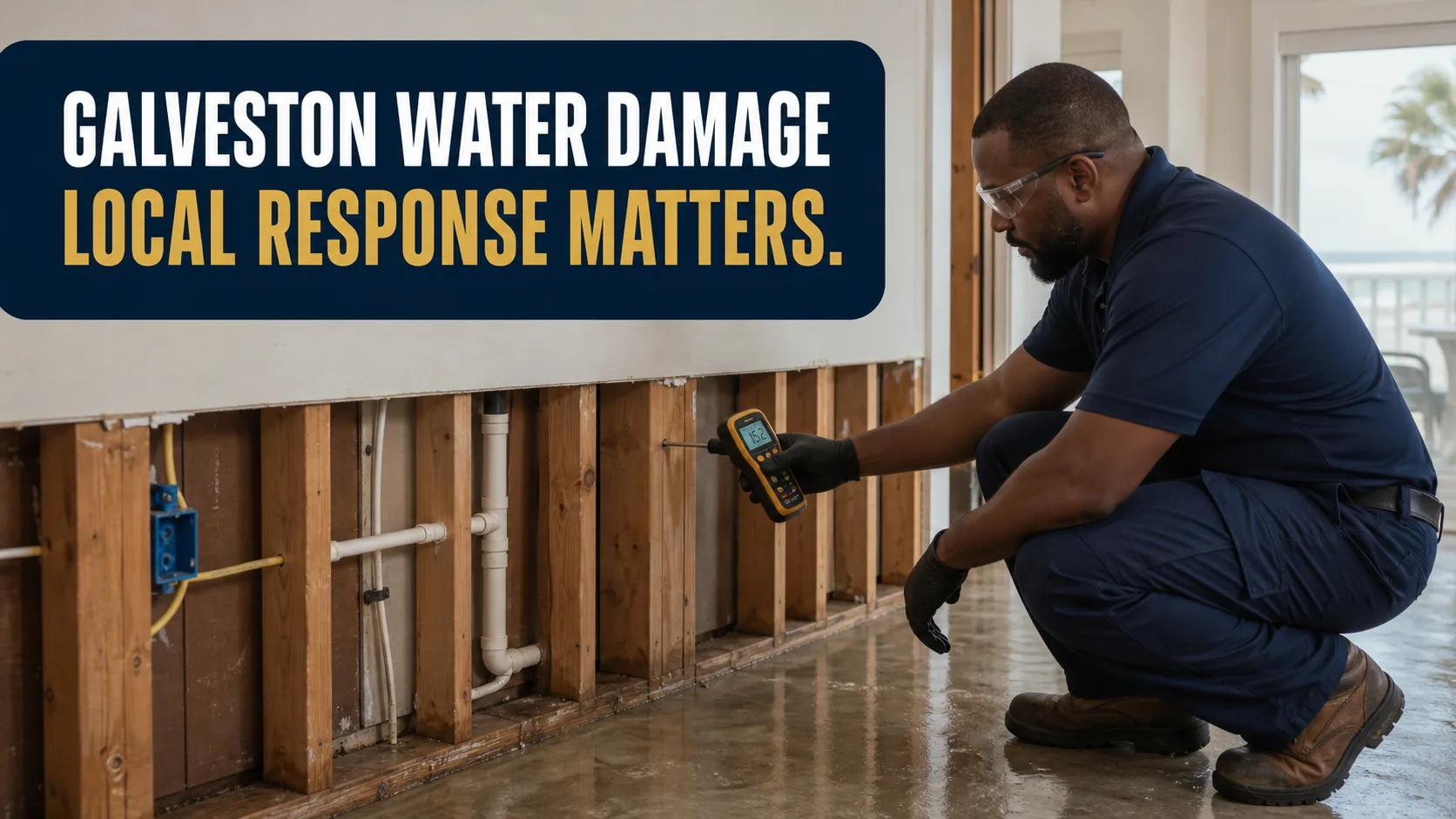
A technician wearing safety glasses and gloves kneels to inspect water-damaged wall studs and exposed pipes, using a moisture meter on the wood. Caption on image: GALVESTON WATER DAMAGE LOCAL RESPONSE MATTERS.
The short answer

TruePoint Restoration serves Galveston Island — the historic district, the seawall neighborhoods, and the West End. Same-day emergency extraction, structural drying, and insurance-grade documentation from a local, owner-operated crew. As a barrier island, Galveston carries the region's highest hurricane and surge exposure, plus salt-air corrosion and older-home considerations. Flood insurance is essential here. Call or text **(346) 271-7004** with your location and a photo.
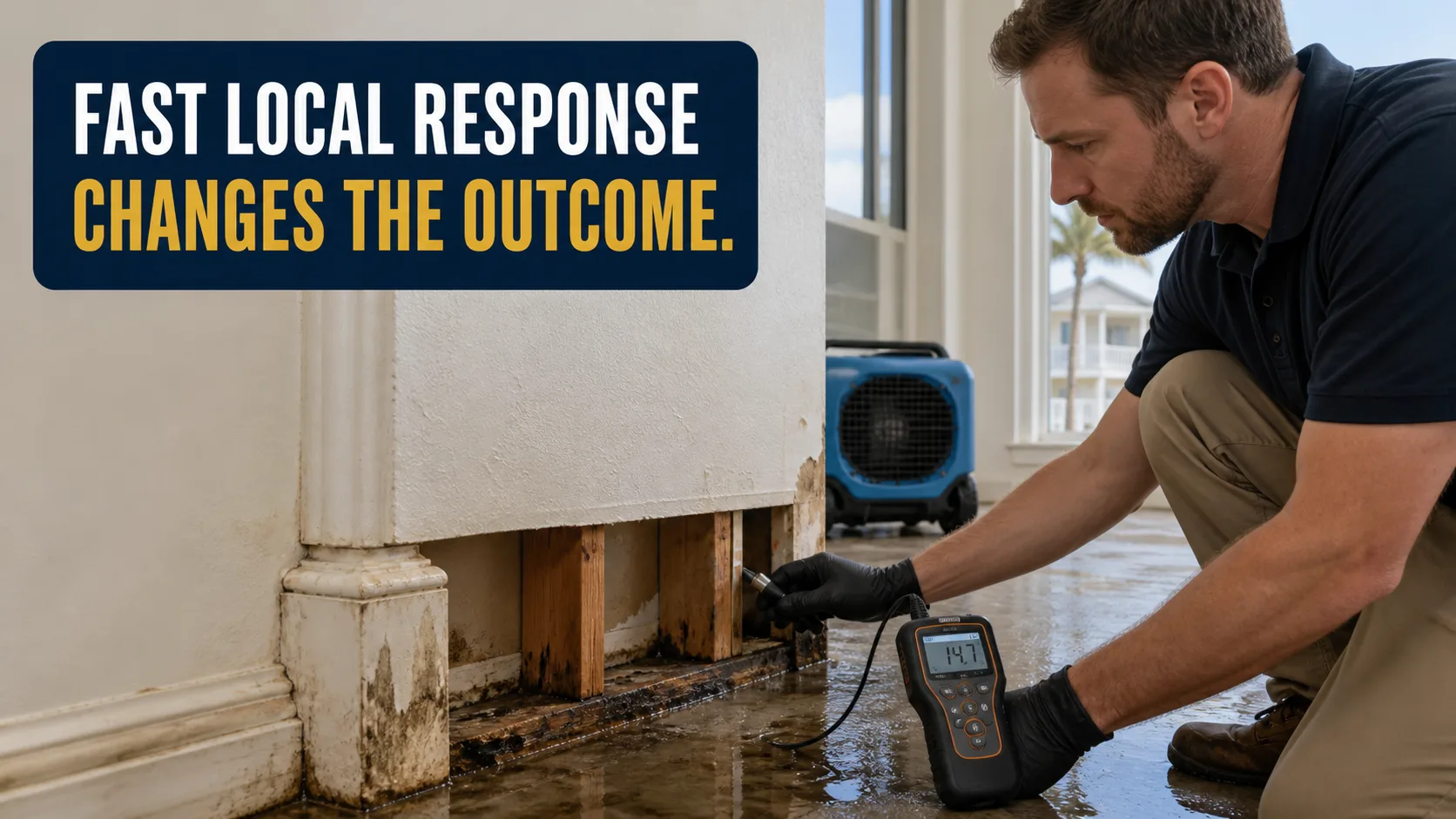
A technician wearing black gloves kneels to measure moisture in a water-damaged wall with exposed studs, while a blue air mover sits in the background. Caption on image: FAST LOCAL RESPONSE CHANGES THE OUTCOME.

Local to Galveston

Nowhere in the region faces water like an island does. Between hurricane and surge exposure, salt-air corrosion, and a stock of older and historic homes, Galveston losses reward experience and careful documentation. TruePoint Restoration documents your loss the way adjusters need and helps you keep the homeowners and flood coverage pieces straight.

Galveston is a barrier island in Galveston County, and every material fact about restoration here follows from that. The Gulf is on one side and the bay on the other, the salt is in the air permanently rather than during storms, the ground floor of a great many houses is legally not living space, and a large share of the housing stock is either older than the 1900 Storm or sitting on fill raised after it.

What causes water damage in Galveston homes

  • Hurricane and surge. The island’s exposure to wind, rain, and storm surge is the defining risk. Surge and outside flooding are flood-policy matters; wind-driven rain through storm-damaged roofing may be homeowners.
  • Salt-air corrosion. Accelerates failures of connectors, water heaters, and fittings.
  • Humidity and mold. High humidity keeps materials wet and shortens the window before mold starts.
  • Older-home plumbing. Historic homes carry aging systems that fail and dry differently.

Salt air shortens the clock on a fire loss

Soot is corrosive everywhere. On the island it is worse, because the chlorides in fire residue and the chlorides already in the air work on the same metal at the same time, and the humidity that feeds the reaction never drops away.

In practice that means brass, chrome, stainless, and appliance and electronics contacts start etching within a day or two rather than within a week, and etching does not reverse. Soot removal on the island is a speed problem before it is a cleaning problem, and contents and electronics get triaged first here rather than last. Do not power anything up to test it.

Surge and rain are two different losses

Rain through a wind-damaged roof and surge through the front door look similar on the floor and are nothing alike on a claim. Surge is flood. Wind-driven rain through storm damage may be homeowners or wind. Your insurer will ask which, and the answer is settled by photographs rather than by argument.

Island construction gives you a physical clue. Raised pier-and-beam homes take surge in the enclosure below the living floor and rain from the roof downward. Water above the finished floor with a dry underside is a roof event. Water at the pilings, the stair and the underside with a dry ceiling is surge.

Historic stock, and short-term rentals

East End and Silk Stocking houses carry original wood windows, long-leaf pine floors, and lath-and-plaster — materials that dry slowly and cannot be replaced at a builder’s price. Hardwood on the island is frequently original and worth the extra drying days rather than the replacement.

If the property is a short-term rental, the loss has a business dimension too: cancelled bookings, a repair window inside the season, and documentation an owner needs for a carrier and a platform both.

What we do

  1. Map the water with moisture meters and thermal imaging.
  2. Extract and dry with commercial equipment to a verified dry standard.
  3. Prevent mold by beating the 24-to-48-hour window.
  4. Document for insurance — and help you keep homeowners vs. flood straight.

What island jobs cost

  • Access. Raised construction, narrow lots and alley-only rear access affect how equipment gets placed and how long setup takes.
  • Material. Original plaster and long-leaf pine cost more to save and far more to replace than drywall and laminate.
  • How fast metal treatment starts on a fire loss. Corrosion control begun on day one is a line item. Begun on day five it is a replacement schedule.
  • Whether the ground-level enclosure is in scope. Surge below the living floor is a removal and decontamination job in its own right.

A contained single-room loss in a newer west-end house is a low-thousands job. A historic East End house with plaster, original floors and a fire runs to five figures and beyond.

Windstorm, flood, and actual cash value

Galveston County property commonly carries a separate windstorm policy, because standard homeowners here frequently excludes wind and hail. Flood is separate again. Three policies is normal on this island, and the deductibles are usually percentages of the dwelling limit rather than flat amounts.

The item that catches island owners hardest is valuation. A policy settling at actual cash value pays depreciated value on a sixty-year-old roof or a forty-year-old contents inventory, not what replacement costs — the gap is set out in actual cash value versus replacement cost.

Tonight, at no cost

  1. Photograph the exterior on all four sides and the underside of the raised floor, dated.
  2. Confirm you hold wind and flood policies as well as homeowners, and write down all three deductibles.
  3. If you have had a fire, do not wipe a single metal surface before it is photographed.

Our scope on the island

TruePoint Restoration does mitigation and nothing else. No roofing, no plumbing, no electrical, no HVAC, no rebuild, and no public adjusting — which matters more here, where island jobs attract out-of-town contractors after every named storm.

We do the drying, the soot and odor work, the corrosion control, the contents triage, and the documented file. Galveston Island and up the mainland toward League City: call or text (346) 271-7004.

If you have water damage right now

Stay out of standing water near outlets, stop the source if you safely can, photograph everything, then call or text (346) 271-7004. Honest answer, every time.

Serving Galveston Island and the surrounding Greater Houston metro. See all our service areas.
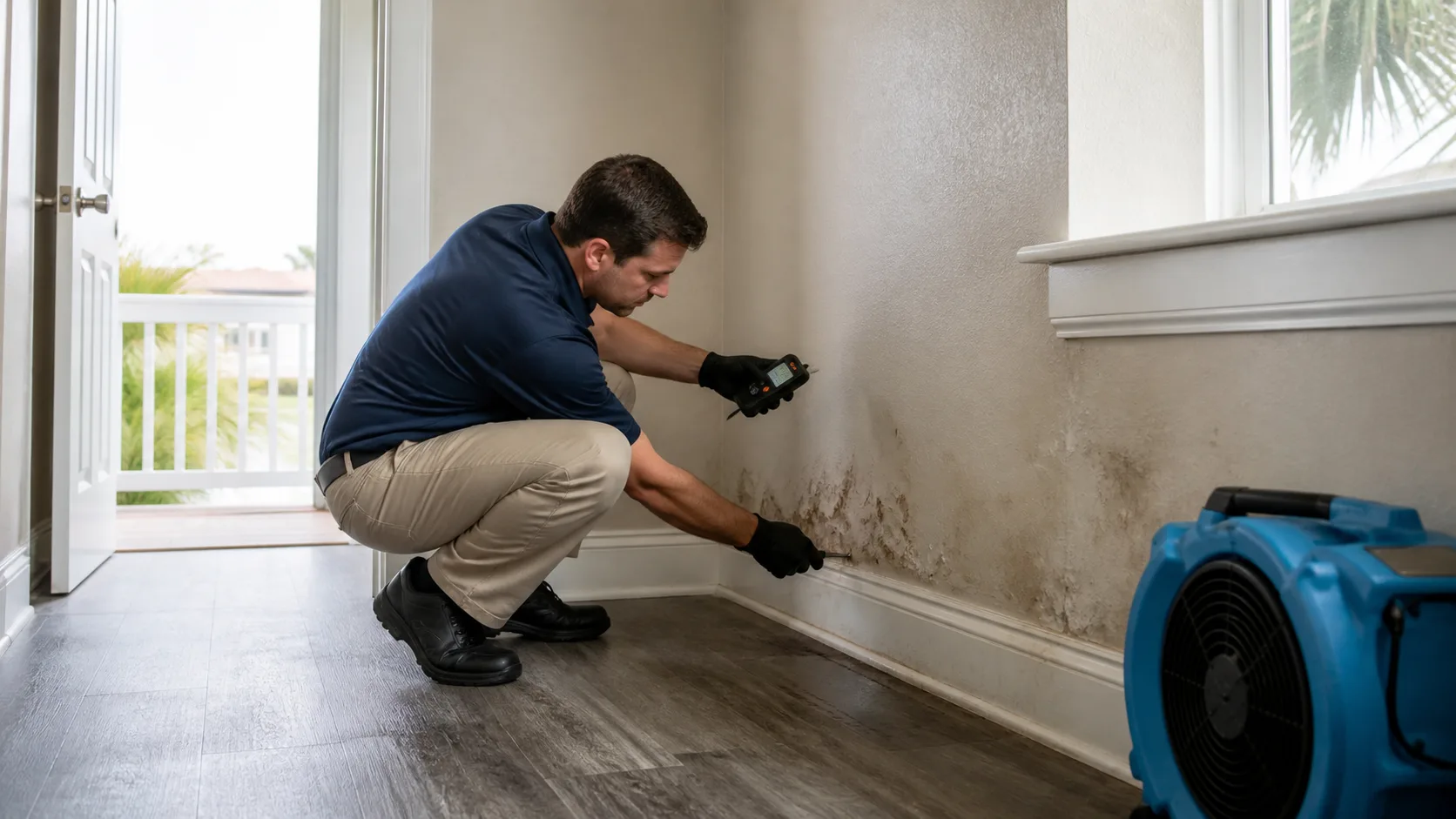
A technician wearing black gloves crouches to inspect water damage and mold on a wall with a moisture meter, next to a blue air mover.
Questions, answered

Galveston Water Damage Questions

Who does water damage mitigation in Galveston, TX?
TruePoint Restoration serves Galveston Island — from the historic district to the West End. Local and owner-operated, we handle emergency water extraction, structural drying, and insurance-grade documentation. Call or text (346) 271-7004 with your location and a photo of the damage for an honest arrival window.
Is Galveston at high risk for hurricane and surge damage?
Yes — as a barrier island, Galveston has among the highest hurricane, wind, and storm-surge exposure in the region, with a long history of major storm flooding. Flood insurance is essential here. Critically, storm surge and outside flooding are covered only by a separate flood policy (NFIP or private), while wind-driven rain through storm-damaged roofing may fall under homeowners. Documenting the source is vital on the island.
Does salt air on the island cause more water damage?
It contributes. Galveston's salt air accelerates corrosion on plumbing connectors, water heater components, fittings, and HVAC parts, shortening their service life and causing earlier failures. Combined with high humidity that keeps materials wet, island homes benefit from replacing connectors and water heaters on a schedule and drying any loss fast.
Do Galveston's older and historic homes need special handling?
Often, yes. Historic homes may have older plumbing, plaster walls, raised foundations, and materials that respond differently to water and drying than modern construction. They also carry value worth protecting with careful, documented mitigation. We approach older homes with that in mind — thorough moisture mapping and controlled drying rather than one-size-fits-all.
How fast can you respond in Galveston?
Same day where access allows — and after a storm, fast documented mitigation protects both your home and your claim. With island humidity, mold can start within 24 to 48 hours. Call (346) 271-7004, text a photo, and we'll give you an honest arrival window.
What's the difference between water mitigation and remediation?
Mitigation stops the damage—we extract water, dry the structure, and prevent mold within hours. Remediation comes after and handles what mitigation couldn't prevent: mold removal, material replacement, reconstruction. You want mitigation first. That's the emergency response that saves the house.
What exactly happens when you mitigate water damage?
We map moisture with meters and thermal imaging, extract standing water with pumps and vacuums, run dehumidifiers and air movers to dry materials to specification, and document everything for your adjuster. In Galveston's humidity, we're racing the mold clock. Speed and proper drying standard are everything.
Why does salt air make water damage worse in Galveston?
Salt accelerates corrosion of connectors, water heaters, and metal fittings—you're not just dealing with wet materials, you're fighting chemistry. A failure that takes years inland happens in months on the island. Another reason Galveston losses need early, thorough drying and careful documentation.
Do you handle fire and smoke damage on Galveston Island?
Yes, across the island — the East End historic district, the seawall neighborhoods, and the West End. Island fire losses need a careful hand, because so much of the housing stock is old-growth wood and original millwork that the wrong cleaning method ruins in a single pass. Text photos and your address to (346) 271-7004 before anyone touches a sooty surface.
My neighbor's house burned and mine is ten feet away. Do I have smoke damage?
Very likely, because the older blocks on the island are built tight together. Radiant heat scorches siding and melts vinyl on the facing wall, and smoke pushes in wherever the envelope opens. Check the attic first — that is where smoke enters through ridge and soffit vents and settles into insulation, long after the outside of the house has been washed down.
Can a historic Galveston house be cleaned after a fire, or does the interior have to go?
A great deal can be saved when the work starts fast and in the right order. Old-growth pine, shiplap, and original millwork hold odor more stubbornly than modern drywall, but they also tolerate a careful dry soot pass that would tear up painted gypsum board. The mistake that costs an island house its interior is wet wiping first, which drives acidic soot into the grain and sets it permanently.
Our beach rental had a fire. How do we get it back in service?
Sequence beats speed. Secure and board up, get the soot off dry before anything wet touches it, dry the hose water, then deodorize at the source and verify the result with the house closed up and the system running. A rental that reopens with residue still in the ductwork or under the beds will smell like smoke the first hot afternoon a guest shuts the door.
How do you dry an elevated pier-and-beam house on the island?
You treat the floor system as its own problem. Water that runs across an elevated floor soaks the subfloor and the insulation between the joists, and the open air under the house is outdoor air — on a humid island day it re-wets material as fast as it dries. That usually means pulling wet batts, working the underside where the framing allows, and often taking up finish flooring so the subfloor can be dried from above.
Why can't island storm water just be dried out like a pipe leak?
Because of what is in it. Surge and storm water carry sand, sewage, and salt, and the salt stays behind in the material after the water is gone — holding moisture and corroding fasteners and metal connectors long after the readings look normal. Porous materials come out, framing gets cleaned and rinsed where practical, and drying starts only after that.
Water or fire damage right now?

Talk to someone who documents it properly.

Certified water and fire damage mitigation across Pearland, Manvel, Friendswood and the Greater Houston area. Text a photo of what you are seeing and we will tell you whether it needs professional drying.

Call or text (346) 271-7004