Service Areas · August 15, 2026

Water Damage Mitigation in League City, TX

Local water damage mitigation in League City, TX. Same-day extraction, structural drying, and insurance documentation for Galveston county homes near Clear Lake and Clear Creek — with coastal storm exposure.

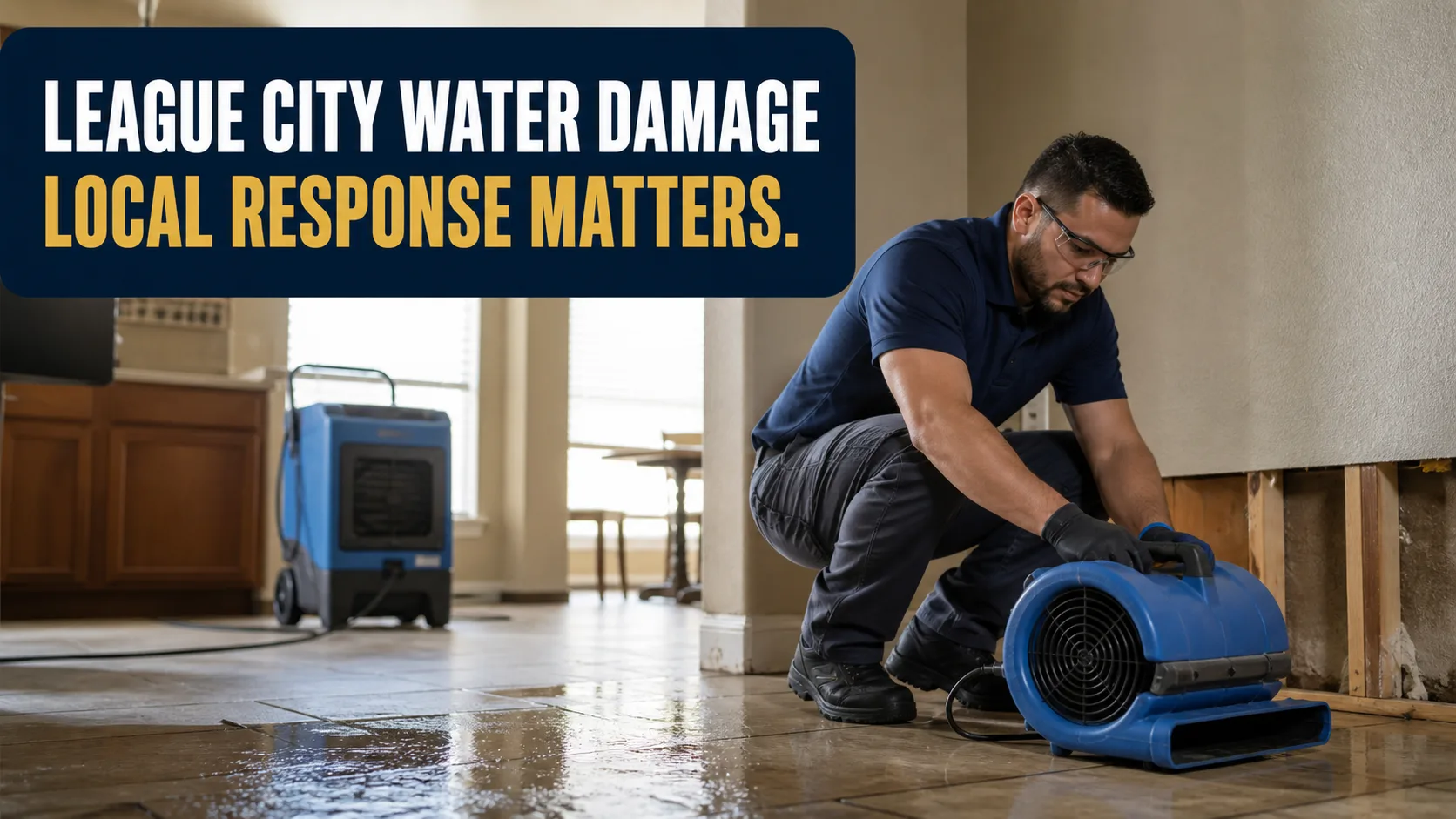
A technician wearing safety glasses and gloves places a blue air mover on a wet tiled floor next to a wall with exposed studs, with a dehumidifier in the background. Caption on image: LEAGUE CITY WATER DAMAGE LOCAL RESPONSE MATTERS.
The short answer

TruePoint Restoration serves League City across Galveston county — Clear Lake-area neighborhoods, South Shore Harbour, and beyond. Same-day emergency extraction, structural drying, and insurance-grade documentation from a local, owner-operated crew. League City's coastal location adds real hurricane and storm-surge exposure on top of everyday interior leaks — and the homeowners-vs-flood coverage line matters here. Call or text **(346) 271-7004** with your location and a photo.
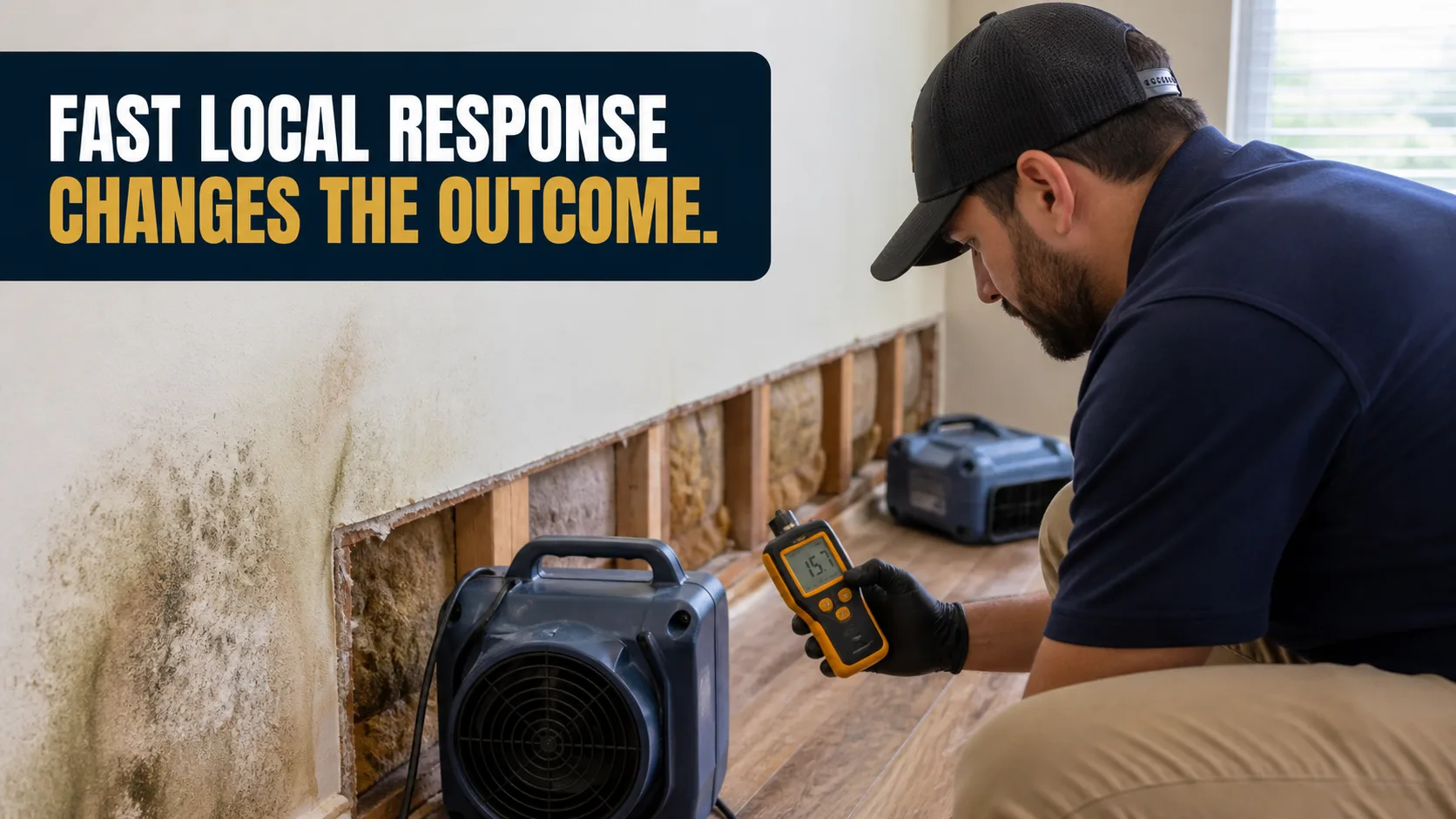
A technician wearing a black cap and gloves kneels on a wood floor, holding a moisture meter near a wall with visible mold and exposed studs, with two air movers on the floor. Caption on image: FAST LOCAL RESPONSE CHANGES THE OUTCOME.

Local to League City

On the coast, storms and everyday leaks both put water in homes — and the insurance picture is more complicated because homeowners and flood policies intersect. TruePoint Restoration is local and owner-operated, with a team that documents your loss the way adjusters need and helps you keep the coverage pieces straight.

League City is Galveston County, and it covers more ground than most people assume. Clear Creek forms the northern boundary, Dickinson Bayou runs to the south, and Clear Lake and the bay sit east. The city runs its own fire department across a footprint that holds 1960s Clear Creek Village, a wide band of 1980s and 1990s subdivisions, and master-planned construction still going in on the west side.

What causes water damage in League City homes

  • Hurricane and storm exposure. League City’s coastal location means wind-driven rain, roof intrusion, and surge risk during tropical systems. Surge and outside flooding are flood-policy matters; wind-driven rain through storm-damaged roofing may be homeowners.
  • Attic HVAC condensate leaks dropping water through ceilings all summer.
  • Water heater and supply-line failures in attics and closets.
  • Sewer backups. Heavy rain can surcharge systems and cause sewer backups — contaminated water that needs professional handling.

Three housing generations, three failure patterns

The older stock near Clear Creek has original cast iron drains and, in places, galvanized supply. Both fail from the inside, slowly, and the first sign is usually a drain that has been sluggish for a year rather than anything dramatic.

The 1980s and 1990s middle band is where copper supply meets slab-on-grade over clay. Clay moves with the wet-dry cycle, the slab moves with the clay, and the copper underneath takes the strain. Slab leaks here show up as a warm patch on the floor and a water bill that stepped up and stayed there.

The newest west-side subdivisions are two-story with attic air handlers, and their signature loss is the secondary drain line dripping over a window because the primary condensate line blocked weeks earlier and nobody looked.

The marina factor

South Shore Harbour and the Clear Lake waterfront put a great many boats in League City garages and driveways, and boats bring their own version of this work — a shore-power fault, a bilge failure in a garage-stored hull, or a covered slip taking wind damage. The garage is also where the water heater usually lives, on the lowest slab in the house, directly above the boxed contents.

Flooring is the other thing worth naming. A large share of League City homes have engineered or solid hardwood over slab through the main living areas, and wet hardwood is the most reversible-or-not decision in a residential loss. Cupping caught inside a couple of days often relaxes with proper drying. Buckling that has lifted boards off the slab does not.

What we do

  1. Map the water with moisture meters and thermal imaging.
  2. Extract and dry with commercial equipment to a verified dry standard.
  3. Prevent mold by beating the 24-to-48-hour window.
  4. Document for insurance — and help you keep homeowners vs. flood straight.

What a League City job costs

  • Which generation of house. Cast iron under a 1965 slab and PEX in a 2019 wall are different jobs to reach, and access is most of the labor.
  • Whether the flooring can be saved. Drying hardwood in place with mats and directed airflow is a real line item, and it is usually cheaper than replacing the floor. Sometimes it is not, and we will say which.
  • Contents. Garage and attic storage volume drives the contents side independently of the structure side.

Low thousands for a contained same-day loss. Five figures for a slab leak found late, a creek event, or surge into a ground floor. Ask any contractor to show you the line items rather than a single figure.

Windstorm, flood, and the percentage deductible

League City is in Galveston County, which puts it in coastal windstorm territory. Many policies here exclude wind and hail and send it to a separate windstorm policy, and flood is separate from both. Read all of them.

The detail that surprises people at claim time is the deductible structure. Coastal wind deductibles are commonly a percentage of the dwelling limit rather than a flat sum, which on a large house is a very different number from the one on the homeowners side. And whether the policy settles at replacement cost or actual cash value decides what you actually receive on a fifteen-year-old roof.

Tonight, free

  1. Read your declarations pages and write down all three deductibles in dollars, not percentages.
  2. Check the attic secondary drain line for drip evidence at the exterior wall.
  3. Turn the main shut-off once so you know it turns.
  4. Photograph the garage, the boat, and every room, dated.

Our scope, plainly

TruePoint Restoration handles mitigation. We do not repipe, tunnel slabs, do electrical or HVAC repair, rebuild, or act as your public adjuster.

We map the moisture, extract, contain, dry to a documented standard, remove what cannot be saved, handle smoke and odor, and produce the file. League City, and neighboring Clear Lake and Friendswood: call or text (346) 271-7004.

If you have water damage right now

Stay out of standing water near outlets, stop the source if you safely can, photograph everything, then call or text (346) 271-7004. Honest answer, every time.

Serving League City and the surrounding Greater Houston metro. See all our service areas.
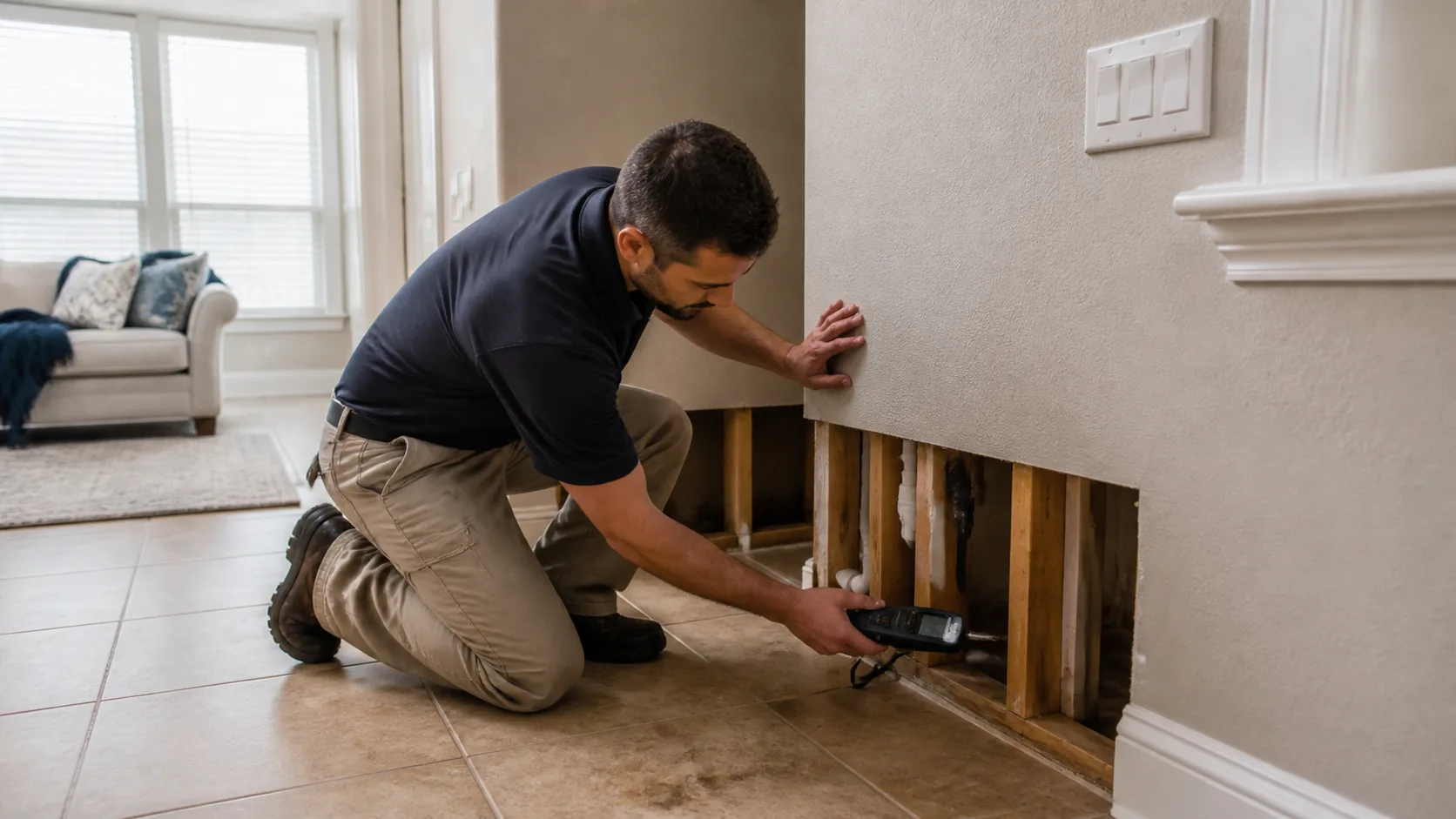
A technician kneels on a tiled floor, holding a moisture meter to a wall with a section of drywall removed, revealing wooden studs and insulation.
Questions, answered

League City Water Damage Questions

Who does water damage mitigation in League City, TX?
TruePoint Restoration serves League City across Galveston county — from Clear Lake-area neighborhoods to South Shore Harbour and beyond. Local and owner-operated, we handle emergency extraction, structural drying, and insurance-grade documentation. Call or text (346) 271-7004 with your location and a photo for an honest arrival window.
Is League City at risk for hurricane and storm surge damage?
Yes — League City's coastal location near Clear Lake and Galveston Bay puts it in the path of hurricane wind, rain, and surge. That's a real exposure on top of everyday interior leaks. Important to know: storm surge and outside flooding are covered only by separate flood insurance, while wind-driven rain through a storm-damaged roof may fall under homeowners. Document the source carefully.
Does League City flood?
Areas near Clear Creek, Clear Lake, and the bay have flooding and surge history, especially during tropical systems. But many League City water-damage calls are still interior failures — attic HVAC leaks, water heater failures, and burst pipes. The coverage line matters: outside flooding needs a flood policy; sudden interior failures are usually covered by homeowners.
How fast can you respond in League City?
Same day, usually within hours. With Gulf humidity, mold can start within 24 to 48 hours, so fast arrival matters — and after a storm, quick documented mitigation protects both your home and your claim. Call (346) 271-7004, text a photo, and we'll give you an arrival window.
Do you document League City storm and water damage for insurance?
Yes, and it's especially important on the coast where homeowners and flood coverage intersect. Yes. We document League City losses — moisture readings, source of loss, drying logs, photos — in the format adjusters expect, and help you keep the homeowners and flood pieces straight.
What's the difference between water mitigation and remediation?
Mitigation stops the damage — we extract water, dry the structure, and prevent mold within 24-48 hours. Remediation comes after: removing damaged drywall, flooring, and contaminated materials. Get mitigation done fast, or remediation costs triple. We handle both, but speed on mitigation saves money.
What does water mitigation actually include?
Extraction with truck-mounted or portable pumps, structural drying with dehumidifiers and air movers, moisture mapping to find hidden water, mold prevention, and insurance-grade documentation of what we removed and dried. We work to industry dry standards, not guessing.
How much does water mitigation cost in the Houston area?
Depends on square footage affected, water source, and how long it sat. A bedroom extraction and dry runs $800–2,500. Whole-house jobs are $2,500–8,000+. Most homeowners policies cover it 100% after deductible. Call with photos and location; we'll give you a real number.
Do you handle fire damage in League City?
Yes, from the Clear Creek-side neighborhoods out to South Shore Harbour. What usually decides how a League City fire loss turns out is the first couple of days — soot is acidic, and every hour it sits on a painted or metal surface makes it harder to lift cleanly. Send photos and your address to (346) 271-7004 and we will tell you straight what it takes.
We store a boat in the garage. Does that change a fire loss?
It changes the residue. Fuel, two-stroke oil, fiberglass, canvas, and marine batteries burn hot and dirty, so a garage fire around South Shore Harbour that involves a boat or a trailer leaves heavier, oilier soot than a household fire — the kind that smears if you touch it wet and needs sealing before paint. It also raises the odds the smoke pushed through the shared attic into the living space.
The fire was downstairs but the upstairs looks worse. Is that normal?
Completely normal. Smoke rises and follows the stair chase, so in a two-story League City home the upstairs hallway, the bedrooms, and the tops of the closets often collect more residue than the room that actually burned. Ceilings and high wall surfaces get worked first for that reason — soot loosened up high falls onto anything already cleaned below it.
Water came into my garage but not the house. Do I still need anything done?
Usually yes, and it is worth a look before you assume it dried on its own. A garage slab holds moisture, the bottom plates and any finished wall on the shared side wick it up, and a wet party wall carries both moisture and odor into the living space behind it. Whether garage water is covered is a separate question, so photograph the source and the depth before you start cleaning up.
The kitchen flooded. Do the cabinets have to come out?
Not always, but the toe kicks usually do. Water gets under the cabinet boxes and sits in the void behind the kick plate where no air reaches it, so we open or remove the kick to dry the cavity and the subfloor underneath. Particleboard boxes that swelled, delaminated, or lost their finish are replacement; solid and plywood boxes often survive if the water is pulled out fast.
Do I have to use the restoration company my insurer recommends?
No. You choose who works on your home — a preferred-vendor list is a convenience for the carrier, not an obligation for you. What matters is that whoever you pick documents the loss the way an adjuster needs it: moisture readings, affected materials, equipment logs, and dated photographs. That file is what the claim actually gets paid on.
Water or fire damage right now?

Talk to someone who documents it properly.

Certified water and fire damage mitigation across Pearland, Manvel, Friendswood and the Greater Houston area. Text a photo of what you are seeing and we will tell you whether it needs professional drying.

Call or text (346) 271-7004