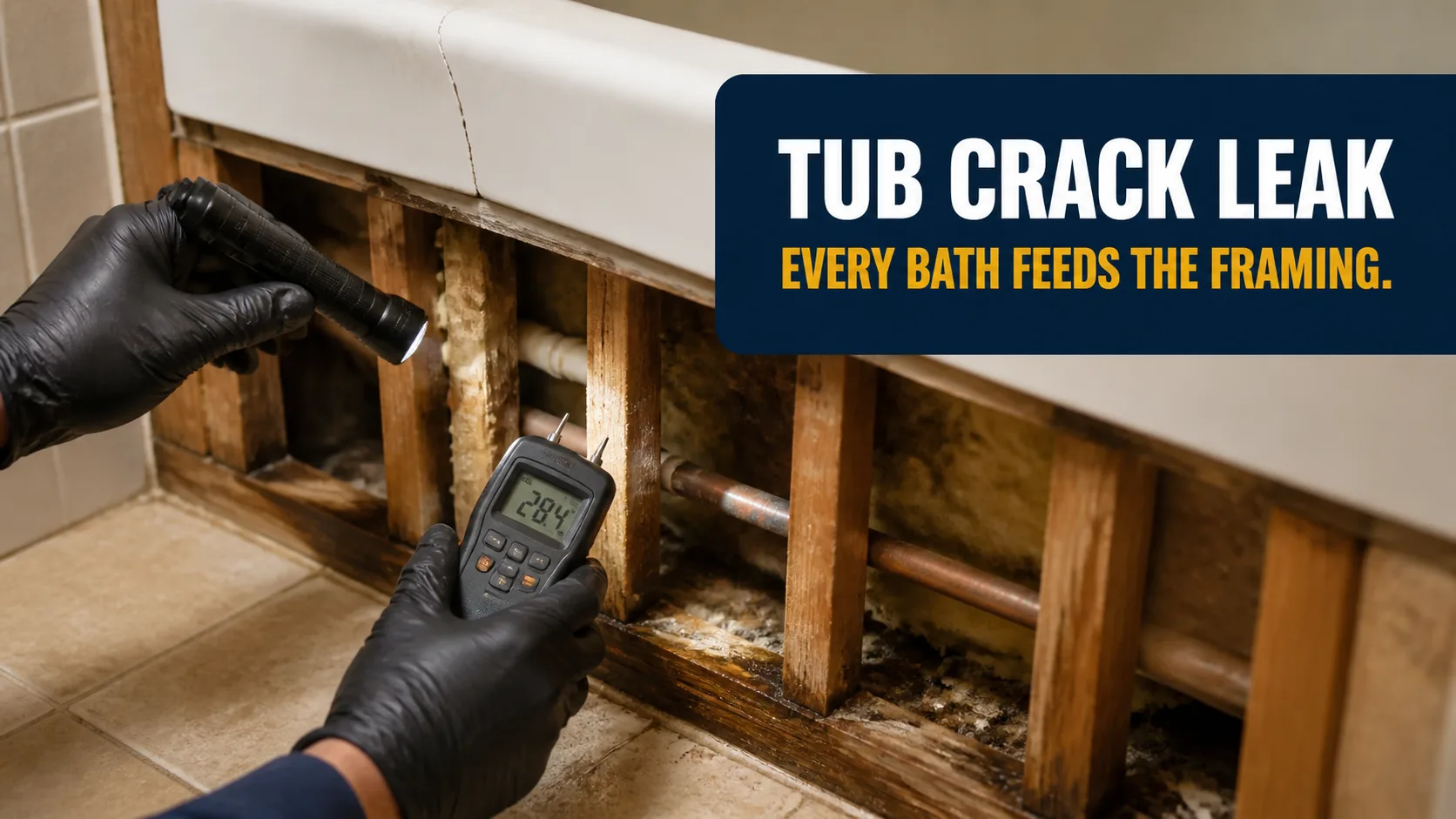
Stop using the tub, then find out if the crack passes water: fill above the crack, mark the level, wait two hours. A dropping level or moisture below means every bath has been soaking the enclosed cavity under the tub — one of the worst-drying spaces in a Houston home. Photograph and date everything, get the cavity metered before any repair, and know that patching the crack without fixing the tub's flexing just schedules the next crack.
Why tubs crack
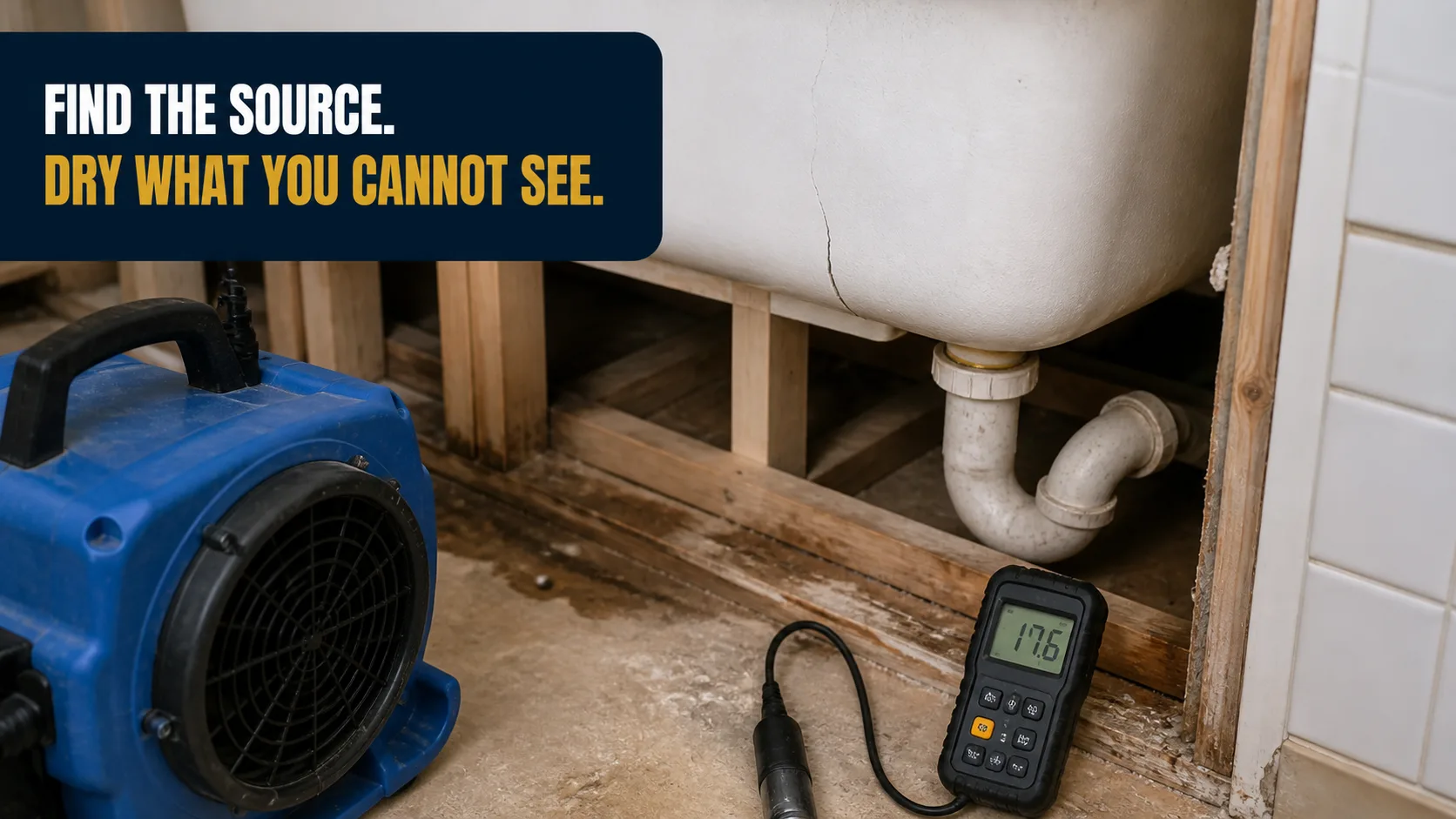
Modern tubs are mostly fiberglass or acrylic — light shells that depend on support underneath. Installed correctly, the pan sits on a mortar or foam bed; installed quickly, it bridges air. Every fill (water is heavy: 8.3 lbs per gallon) and every person standing in it flexes the unsupported shell a little. Years of flexing fatigue the material until a stress crack opens, usually in the floor pan or a bottom corner.
Add impact chips, harsh cleaner embrittlement, and age, and you get the crack you are looking at.
The distinction that matters:
- Surface crazing — spider-web lines in the gel coat that don’t flex or grow. Cosmetic. Watch it.
- Structural crack — a line that opens under weight, keeps lengthening, or passes water. That is a leak with a bathtub attached.
The warning signs, and where they show up first
A cracked tub is usually found from underneath rather than at the tub.
At the tub: a line in the pan that opens or clicks when you stand on it, a floor that feels spongy underfoot, a crack measurably longer than it was last year, or caulk at the tub-to-floor joint that keeps failing in the same spot.
Around the tub: flooring lifting at the seam beside the skirt, baseboard swelling on the wall the tub backs onto, or a musty note in the bathroom that is strongest near the floor.
Below the tub: on an upstairs bathroom the ceiling underneath is your instrument panel — a stain that grows after a bath, a hairline in the paint that was not there before, nail heads showing through, or any sag in the field. A wet ceiling is a schedule, not a stain, and drywall holding pooled water fails all at once.
On the water bill: nothing at all. A tub leak does not run on pressure, so it never shows on a meter test. The checks that catch a shower pan failure or a supply leak do not catch this one, which is most of why it hides.
The fill test
- Plug the drain. Fill the tub above the crack line.
- Tape-mark the water level. Do not use the tub for 2 hours.
- Watch three places: the level, the ceiling below (upstairs tubs), and the floor/baseboards around the tub’s skirt.
- Level drops with a sealed drain → the shell or a submerged seal passes water.
- Level holds, but leaks show during drain-down → the drain piping, not the crack.
- Leaks only when filled above the overflow plate → the overflow gasket — the cheapest fix of the three.
What’s under the tub (and why it matters here)
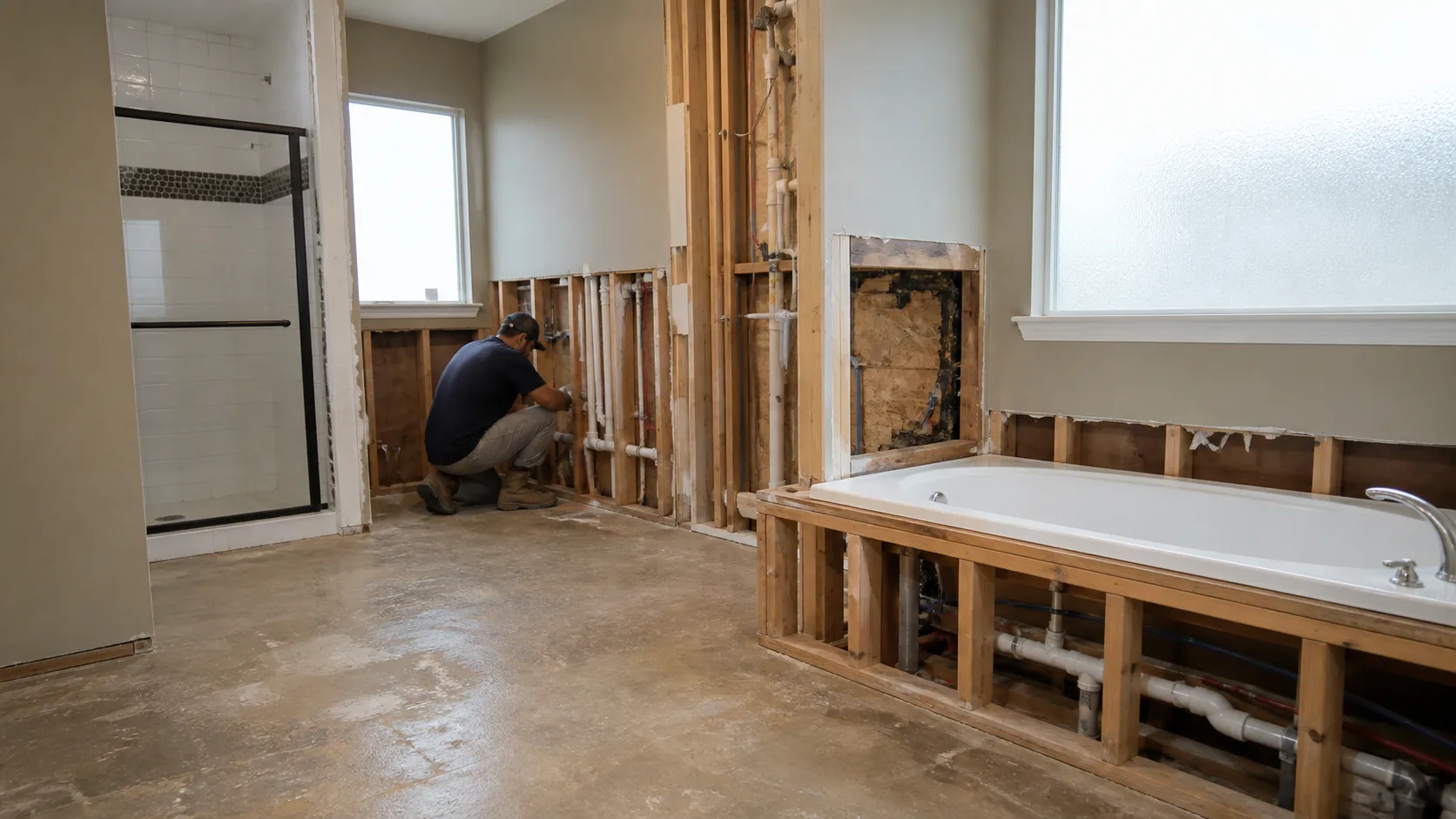
A tub sits in an enclosed pocket: framed deck or skirt on the sides, subfloor below, no airflow anywhere. Water that gets in there has no exit and no evaporation path — in Gulf Coast humidity that cavity holds moisture indefinitely.
Which is why the tub cavity is a routine place we open and find the full progression: soaked subfloor, joist-top rot, established mold — accumulated one relaxing bath at a time over a year of “we should get that crack looked at.”
If your test says the crack passes water, the cavity gets metered before the tub gets repaired. The repair scope depends on what is under there, and every contractor who quotes without knowing is guessing with your money. Photos to (346) 271-7004 and we will tell you what it needs.
Repair or replace
- Crazing / small stable crack: professional patch or refinish plus support-foam injection under the pan to stop the flexing. Patch without support = the crack’s return date.
- Growing crack, visible flex, or repeat failure: replace the tub. And when it is out — that is the once-a-decade chance to inspect, dry, and repair the deck and subfloor properly before the new unit seals it all in.
- Drain or overflow instead of the shell: plumber, parts, done — the happy ending version.
What does a cracked tub cost?
Two separate numbers, and the second one is not knowable until somebody opens the cavity.
The tub is the predictable half. A professional patch runs roughly $300 to $600, a full refinish $800 to $1,200, and a replacement tub $1,500 to $3,500 installed. A patch without support-foam injection under the pan is cheaper and also temporary, because the flexing that opened the crack is still there.
The cavity is where the range opens up:
- Wet framing, still sound. Drying through an access opening, a few days of equipment.
- Saturated subfloor under the pan. The tub comes out. There is no other way to reach the material, and drying around it does nothing.
- Rot in the subfloor or joist tops. Carpentry, new decking, and new flooring on top — this is where the number climbs into the thousands.
- Water through the ceiling below. Add insulation that is bagged rather than dried, ceiling material that comes down, and the wall cavity beside the tub.
That is the argument for metering before anyone quotes. A contractor pricing a tub without knowing what is under it is guessing with your money, and the guess runs low.
How long does drying take under a tub?
Three to five days for wet framing reached through an access opening, and longer whenever the tub has to come out first or the ceiling below is involved. Below-tub cavities are among the slowest spaces in a house to dry, and the reason is mechanical: the pocket is enclosed, there is no ventilation path, and Gulf Coast air holds enough moisture that nothing evaporates out of that space on its own. Air has to be forced in and pulled back out.
Readings decide the end, not the calendar. Subfloor and joist tops get metered against dry framing of the same type in the same house, logged daily, and the new pan does not go in until those numbers match. What sets a drying timeline is depth and access, not floor area.
Does insurance cover a cracked tub?
The tub itself is a maintenance item and it is usually on you. The resulting damage splits the usual way: a sudden crack with prompt action is arguable as sudden and accidental, and a tub that leaked through a year of baths reads as gradual.
The record decides it. Date-stamped photos of the crack, the fill-test result, and the ceiling below, plus a same-week moisture map, are what give the claim a chance — and they are worth having even if you never file, because gradual damage is the standard reason a water claim gets denied and the discovery date is the only defense.
What NOT to do
- Don’t caulk over the crack. Caulk on a flexing shell peels in weeks and hides the water path meanwhile.
- Don’t keep taking baths on a “small” leak — the cavity below is keeping score.
- Don’t set a new tub over an unmetered, unrepaired deck. Sealed-in moisture is the most expensive shortcut in bathroom remodeling.
Prevention
- Support matters at install: a foam- or mortar-bedded tub pan barely flexes and rarely cracks — worth specifying in any remodel
- Skip abrasive and high-solvent cleaners on fiberglass/acrylic; they embrittle the finish
- Treat new cracks, movement underfoot, or a spongy tub floor as test triggers
- Upstairs tub? The ceiling below is your early-warning display — glance monthly
Where the tub installer ends and we begin
TruePoint Restoration does not repair or replace bathtubs. We do not patch shells, inject support foam, reset drains and overflow gaskets, or run new plumbing — and we are not the contractor who tiles the surround back. Call a plumber for the drain and the overflow, and a tub or remodel contractor for the shell.
What we do is the cavity: metering the subfloor, the joists and the wall bases before anyone quotes a repair, removing material that has lost fiber rather than just moisture, drying an enclosed space that will not dry on its own in this climate, remediating mold where a year of baths has started some, and documenting readings your adjuster can use.
Run the fill test, then send the result and a photo of the ceiling below to (346) 271-7004. We serve Pearland, Manvel, Friendswood, League City and the Greater Houston area.